London by rail
London is where the railways converge. Fourteen terminal stations, hundreds of miles of underground track, and a commuter network that stretches into five surrounding counties. Most people pass through without looking up. The Hungry Passenger looks up.
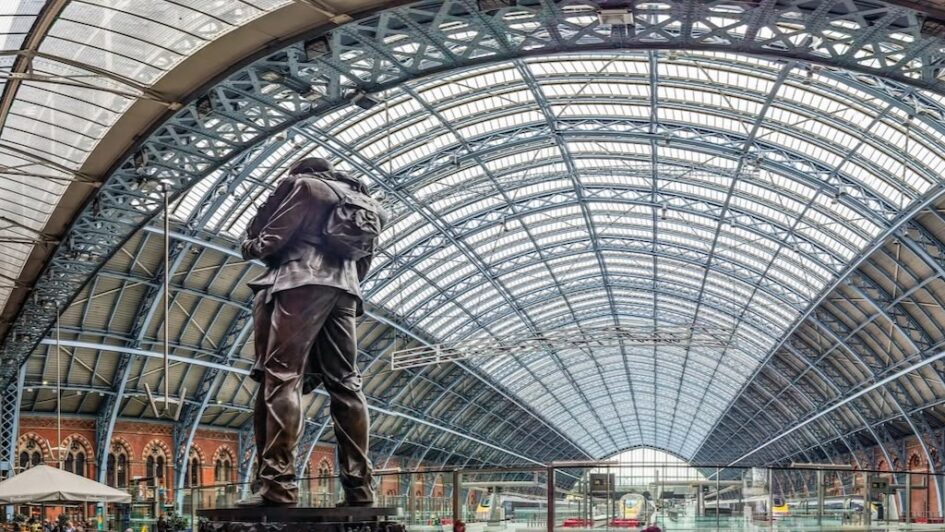
The stations here are worth your attention before you leave them. St Pancras has a roof that still stops people mid-stride. Waterloo faces south, away from the city, toward everything the network connects it to. Paddington is Brunel’s shed, still doing exactly what it was built for. These are not just departure points. They are the point.
 Sign up to The Slow Train and select London to receive your free regional food guide, a curated collection of the best places to eat near railway stations across the region.
The Slow Train is a monthly newsletter from The Hungry Passenger. Each edition includes station-side food writing, personal travel essays from the rails, a book review for the journey, and a reflective slow piece to read at your own pace. No noise. No filler. Just good writing about trains, food and the people in between.
London is served by every major operator. From St Pancras, Eurostar reaches Paris in around two hours and fifteen minutes. The Caledonian Sleeper departs from Euston. The Metropolitan line, the world’s first underground railway, still runs from Baker Street into the Chilterns. The network is the city.
The posts below cover London from every angle, from terminal stations and canal-side walks to winter light installations, hidden mosaics and the long walk across seventeen Thames bridges.
- Britain’s best Christmas lights by trainDiscover five of Britain’s most magical Christmas light displays, with great food and easy access by train.
- London Bridge by train: markets, riverside and old LondonLondon Bridge by train: Borough Market, the Thames and historic Southwark, all just steps from the station.
- Stratford by train: London’s eastern interchangeStratford combines one of Britain’s busiest stations with Olympic parkland, waterways, culture and great food.
- Britain’s best independent bookshops by trainFive of Britain’s best independent bookshops, each worth making a train journey for.
- Britain’s best ice cream by train: 5 places worth the journeyDiscover five brilliant ice cream stops across Britain, from Cornish farm-made scoops to seaside classics and proper Italian gelato.
- Clapham Junction by train: Battersea eats & backstreetsBritain’s busiest interchange hides a great south London neighbourhood, packed with cafés, good food and leafy streets.
- Chase the sunThe longest day reveals one of Britain’s most extraordinary railway journeys
- Chelsea in Bloom 2026: dragons, crowds and floral chaos in west LondonA hot Saturday wandering Chelsea in Bloom 2026, from dragons and giant flowers to packed pavements and west London excess.
- London Victoria: the station that faces the worldLondon Victoria is the second busiest station in Britain. Five minutes south is Pimlico, a different city entirely.
- London Waterloo: the station that faces southThe busiest station in Britain faces south, away from the city, toward chalk streams, ancient stones and the coast.
Don’t forget, sign up to The Slow Train and select London to receive your free regional food guide, a curated collection of the best places to eat near railway stations across the region.