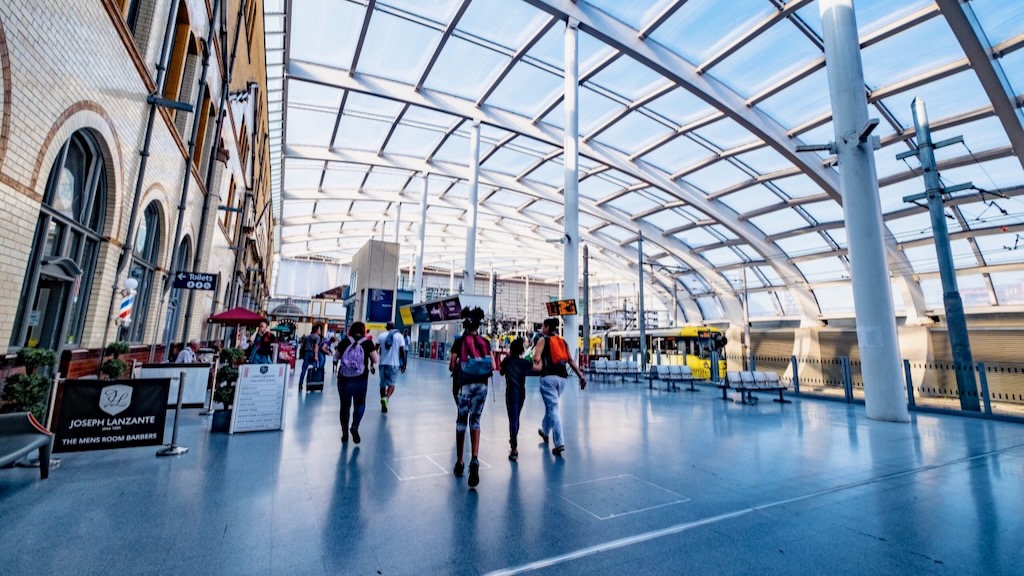
Manchester Victoria is one of those railway stations worth exploring before heading into the city. Behind its busy platforms and modern roof is a remarkable collection of historic features, including an enormous tiled railway map, an elaborate Edwardian frontage and a memorial to railway workers who never returned from war.
Step outside and there is another side of Manchester waiting to be discovered. Medieval buildings, independent cafés, historic pubs and one of the city’s most appealing food halls are all within walking distance.
For a day out by rail, Victoria makes an excellent starting point.
Arriving at Manchester Victoria railway station
Manchester Victoria opened in January 1844, originally serving the Manchester and Leeds Railway. It subsequently became an important centre for the Lancashire and Yorkshire Railway, whose influence can still be seen throughout the station.
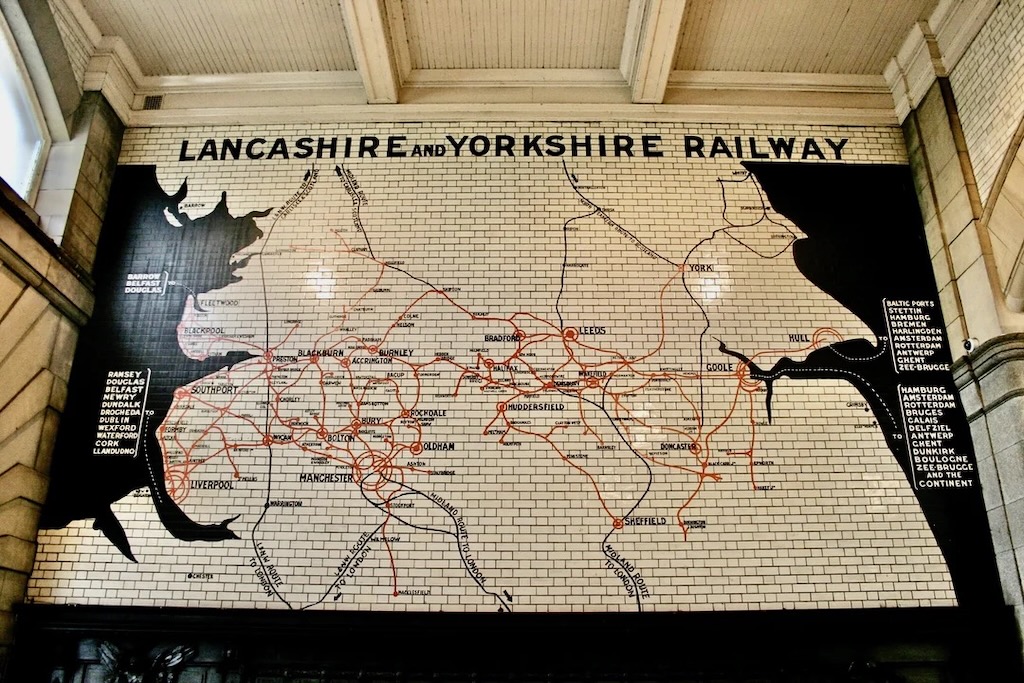
The most striking historic feature is the enormous tiled map showing the Lancashire and Yorkshire Railway network. It dates from the early twentieth century and captures an era when railway companies proudly displayed the extent of their operations.
Nearby, the station’s war memorial, unveiled in February 1922, commemorates railway employees who lost their lives during the First World War. The historic frontage, glazed dome and surviving architectural details are reminders of a station that once stood among Manchester’s great railway landmarks.
Victoria hasn’t always enjoyed such an impressive reputation.
In 2009, a government-commissioned assessment identified Victoria as Britain’s worst major railway station. A £44 million redevelopment, completed in 2015, transformed the passenger facilities and introduced the sweeping, light-filled roof that now covers the platforms.
The contrast between the restored historic buildings and contemporary station architecture makes Victoria particularly interesting. It is a railway station that has managed to retain much of its character while adapting to modern travel.
Breakfast at Café North
A short walk towards Shudehill brings you to Café North, an independent café at number 66.
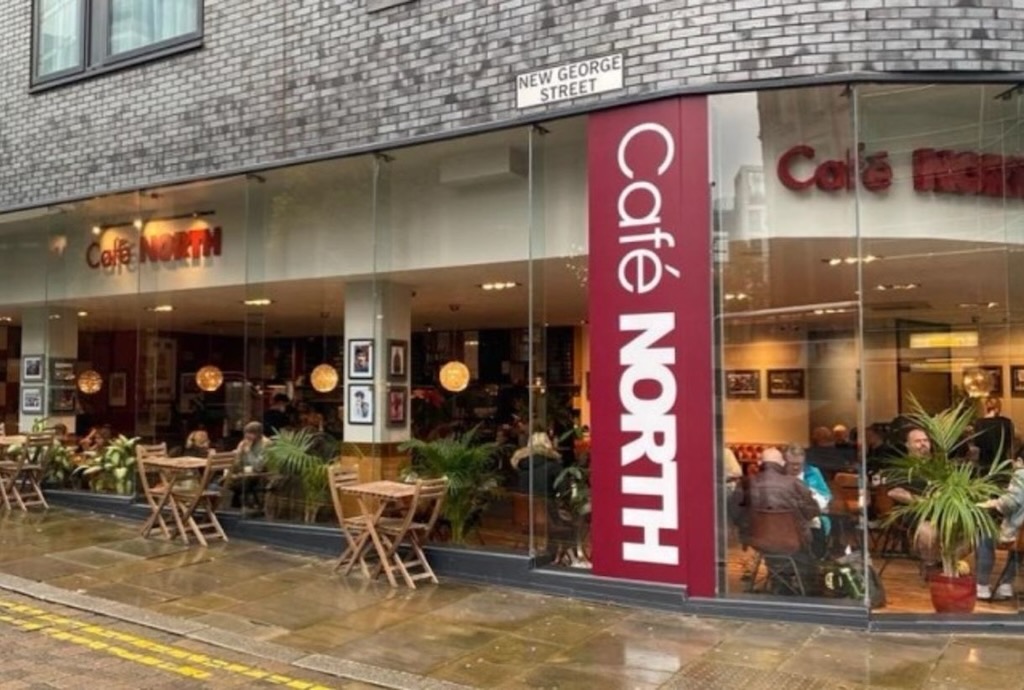
Located on the edge of the Northern Quarter, it offers the sort of straightforward, freshly prepared food that makes a welcome change from grabbing something hurriedly at the station.
Breakfast is a particular strength, with traditional cooked breakfasts alongside lighter choices, coffee and other café favourites.
Its location makes it a useful first stop after arriving at Victoria, whether you’re planning a full day exploring Manchester or simply have a few hours between trains.
The surrounding streets also provide an introduction to the Northern Quarter, where former industrial buildings, independent businesses and cafés contribute to a distinctive part of the city.
Mackie Mayor: a Victorian market reborn
For something more substantial, Mackie Mayor is one of the most interesting food destinations within walking distance of Victoria.
The Grade II-listed building opened in 1858 as part of Manchester’s Smithfield Market complex. Once a bustling centre of food trading, it eventually fell into disuse as the city’s markets changed and relocated.
After extensive restoration, Mackie Mayor reopened as a food hall in 2017.

Today, the impressive brick building contains independent food and drink traders arranged around communal seating. Its high ceilings, ironwork and large windows preserve much of the atmosphere of the original Victorian market.
The choice of food makes it particularly appealing when visiting with different appetites. Rather than committing to a single restaurant menu, visitors can choose between different kitchens and enjoy their meals together.
It’s also a reminder that some of Manchester’s most successful modern food destinations have emerged from buildings originally constructed for entirely different purposes.
For anyone interested in both food and architectural heritage, Mackie Mayor deserves a place on the itinerary.
Discovering Manchester’s Medieval Quarter
Returning towards Victoria brings you into one of Manchester’s oldest and most atmospheric districts.
The Medieval Quarter feels quite different from the city’s larger shopping streets and modern commercial developments. Here, surviving historic buildings offer glimpses of Manchester long before the Industrial Revolution transformed its fortunes.
Manchester Cathedral stands at the heart of the area.
Although the site has a much longer religious history, much of the present building reflects work undertaken during the fifteenth and sixteenth centuries. Its medieval woodwork, intricate carvings and modern stained glass are worth seeing, even during a relatively short visit.
Just a few minutes away is another extraordinary survivor.
Chetham’s Library: a remarkable hidden gem
Chetham’s Library was founded in 1653 and is recognised as the oldest surviving public library in the English-speaking world.
It occupies buildings dating from 1421, originally constructed to house priests associated with Manchester’s collegiate church.
Inside, historic wooden bookcases, ancient volumes and atmospheric rooms preserve an extraordinary sense of the past.
The library is also associated with Karl Marx and Friedrich Engels, who studied together there during the nineteenth century.
Unlike a conventional public library, Chetham’s can only be visited through pre-booked guided tours, making a little advance planning worthwhile.
For anyone interested in history, books or remarkable buildings, it offers one of Manchester’s most distinctive experiences.
A pint in a building dating from 1552
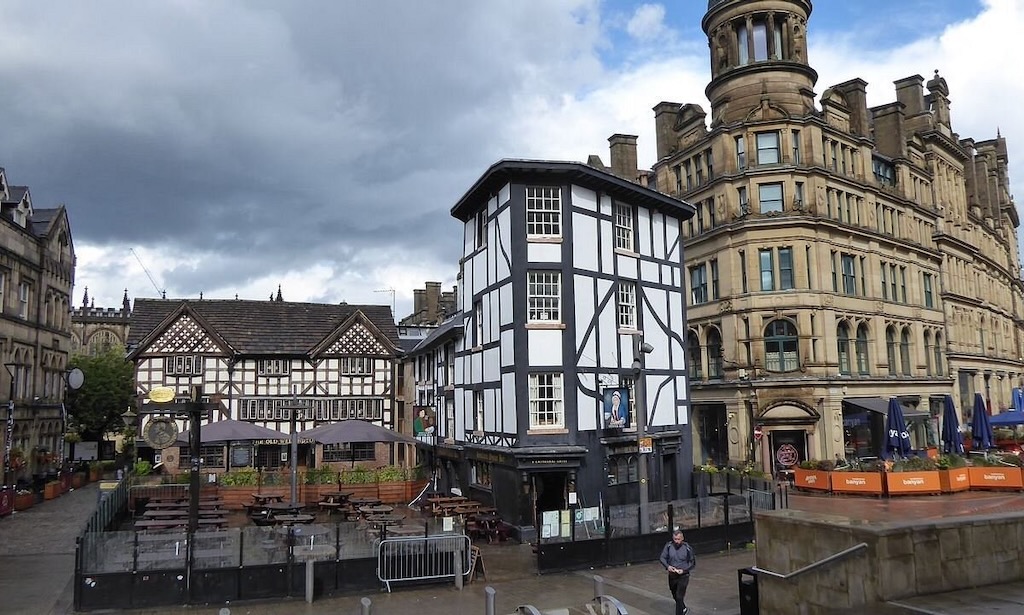
Not far from the cathedral stands The Old Wellington, one of Manchester’s most recognisable historic pubs.
The timber-framed building dates from 1552, although it only became a public house centuries later.
Its history includes an unusual journey of its own. Following the 1996 Manchester bombing and subsequent redevelopment, the building was carefully relocated to its present position in Shambles Square.
Today, it provides a traditional setting for a drink or meal, with its distinctive black-and-white frontage contrasting sharply with the surrounding modern architecture.
The neighbouring Sinclair’s Oyster Bar adds to the historic character of the square.
For a railway day trip, it’s an appealing place to pause before returning towards Victoria.
Another historic pub worth discovering
Visitors willing to walk a little further towards Rochdale Road will find the Marble Arch, a Grade II-listed pub dating from 1888.
Its sloping mosaic floor, tiled interior and distinctive barrel-vaulted ceiling make it memorable before you’ve even reached the bar.
The pub is closely associated with Marble Brewery, which began brewing there in 1997 before eventually moving production elsewhere.
With its selection of cask beers and characterful surroundings, the Marble Arch is another example of Manchester’s industrial and brewing heritage finding a place in the modern city.
THE SLOW TRAIN
Enjoying The Hungry Passenger?
The Slow Train is my monthly email about food, railways and the stories found along the way. Find out more about The Slow Train and join the next departure.
It’s a worthwhile alternative for those who prefer a traditional pub away from the busiest shopping streets.
Exploring Manchester on foot
One of Victoria’s greatest advantages is the number of interesting places within a relatively compact area.
The Medieval Quarter, Shudehill and Northern Quarter can all be explored without relying on additional transport. There are independent shops, cafés, historic buildings and unexpected discoveries along the way.
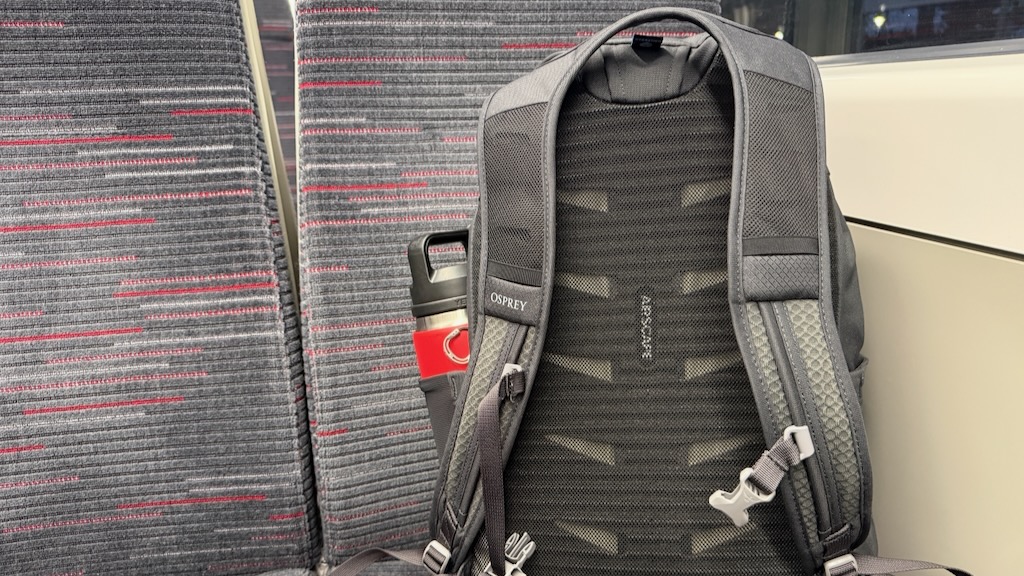
Manchester is particularly rewarding when explored on foot, especially with so much history and independent food within walking distance of Victoria. I generally travel light on days like this, carrying just the essentials in my daypack. I’ve included the things I use most often in my Travel Kit.

There’s plenty to discover simply by choosing a direction and following the streets.
For more places to eat and drink nearby, explore the THP Food Directory listings for Manchester Victoria, all within reach of the station.
Why Manchester Victoria is worth visiting by train
Manchester Victoria has witnessed almost two centuries of change, yet its surroundings still offer glimpses of a much older city.
From a medieval library to a Victorian food market, there’s an extraordinary amount to discover within a short walk. Railway heritage, historic architecture, traditional pubs and independent food all come together in a surprisingly compact part of Manchester.
And that’s one of the pleasures of travelling by train. Sometimes the best part of the journey begins when you leave the station.

🚂 Follow the journey
🍽️ Stephen Plume writes about food, trains, and the people in between.
🚆 The Slow Train: Monthly rail stories. Join for my vetted regional food lists
🧳 Travel Kit: Curious about what I pack for the rails? See the list here

Leave a Reply