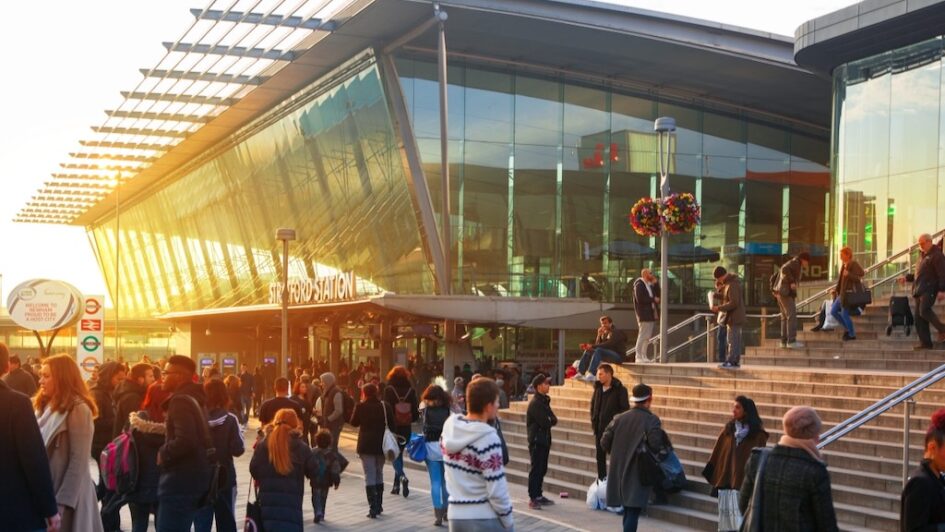
Stratford is one of those places where millions of people arrive every year without necessarily thinking they have arrived anywhere at all. They change trains, head into Westfield, walk towards the football or disappear onto another part of London’s transport network.
Step outside the station, though, and there is an increasingly interesting part of east London to explore. The Olympic Park has matured into something much bigger than a collection of venues left behind by 2012, new cultural institutions are still arriving, waterways thread through the area and some very good food sits within walking distance.
The numbers alone tell you how important the station has become. Stratford recorded an estimated 51.5 million entries and exits in 2024/25, making it the seventh most-used station in Great Britain.
One of London’s great interchanges
The Central and Jubilee lines meet the Elizabeth line here, alongside the DLR and London Overground’s Mildmay line, while National Rail services connect Stratford with destinations across London, Essex and East Anglia.
For The Hungry Passenger, though, the interesting thing is what happens if you resist the temptation to immediately board something else.
The London 2012 landscape
It is now more than a decade since the Olympic Games transformed this part of east London, and Stratford is more interesting because enough time has passed for the Olympic Park to stop feeling like a sporting exhibition.
The London Stadium, Aquatics Centre and other 2012 landmarks remain, but the park around them has become part of everyday London. Paths run between waterways and landscaped spaces, people live in the neighbourhoods around it and the whole area feels considerably more settled than it did in the years immediately after the Games.
That makes it good territory for wandering. You can see some of the architecture that defined London 2012 without making the day exclusively about Olympic history.
Stratford is still changing
The more interesting story now may be what has happened since 2012.
East Bank has brought another concentration of culture and education to the Olympic Park. Sadler’s Wells East is now open, while V&A East has both its Storehouse at Hackney Wick and the new V&A East Museum in Stratford itself. The Storehouse gives public access to around half a million objects, while the museum adds another major cultural attraction directly into the park.
This matters because Stratford no longer needs to trade entirely on the Olympics. The Olympic story explains how the area changed, but the museums, theatres, universities and new neighbourhoods increasingly explain why there is a reason to come back.
Follow the water
One of the best ways to understand Stratford is to keep walking west through the Olympic Park towards Hackney Wick.
The waterways around the River Lea and Lee Navigation soften the landscape considerably. Bridges, towpaths, old industrial buildings and new developments sit together in a way that feels very different from the enormous concourses and shopping centres around Stratford station.
Hackney Wick has its own railway station, but walking from Stratford is much more satisfying. You see the Olympic Park change as you move through it and gradually end up in a neighbourhood with a very different character.
Eat on the water
Barge East is moored on the River Lee at Hackney Wick aboard a 125-year-old Dutch barge.
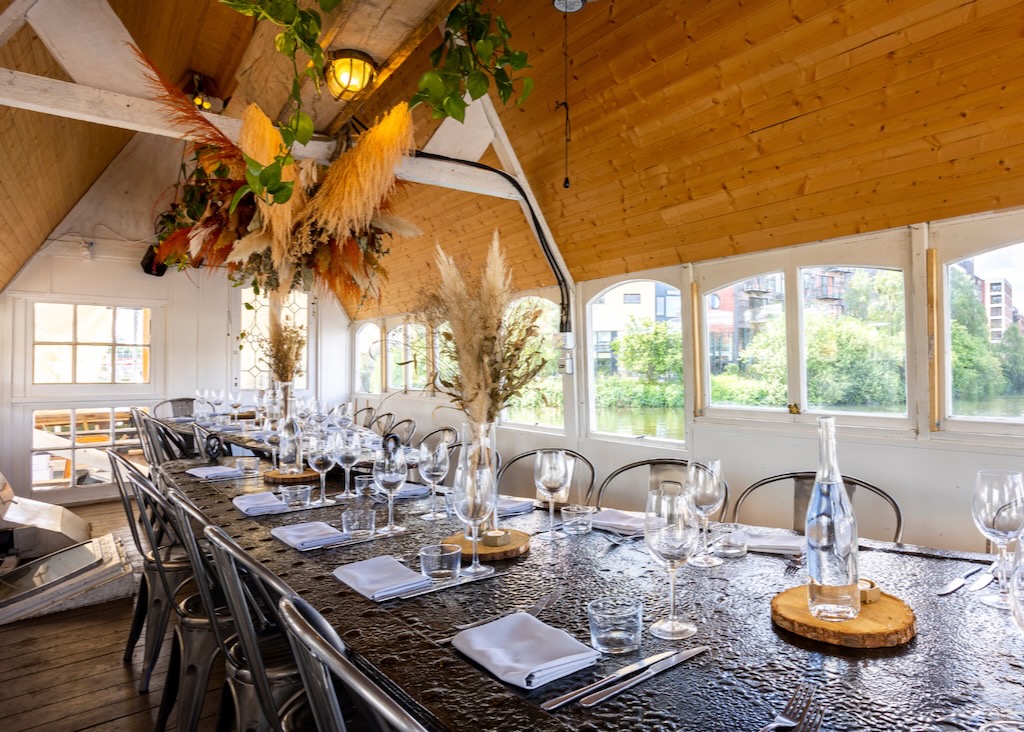
That alone would be enough to make it interesting, but it has become a proper food destination rather than simply somewhere trading on an unusual location. There is a floating restaurant aboard the barge, alongside riverside gardens and terrace space, and the food is built around seasonal produce with some ingredients grown in its own gardens.
The restaurant and riverside areas operate to different opening patterns, so it is worth checking before travelling.
The Hungry Passenger stop: Barge East, River Lee, Hackney Wick. Come for the location, stay because somebody had the good sense to turn an old Dutch barge into somewhere genuinely worth eating.
Something different back towards Stratford
For the second food stop, head back towards the newer Stratford around the Olympic Park, but avoid simply disappearing into Westfield.

Randy’s Wing Bar at Here East is an independent, family-founded restaurant specialising in wings, burgers and loaded sides. It sits beside the canal at the edge of the Olympic Park and gives the article a very different second stop from Barge East without defaulting to a chain.
The Hungry Passenger stop: Randy’s Wing Bar, Here East. Independent, informal and properly rooted in this newer part of east London, with the canal outside and the Olympic Park around the corner.
THE SLOW TRAIN
Enjoying The Hungry Passenger?
The Slow Train is my monthly email about food, railways and the stories found along the way. Find out more about The Slow Train and join the journey.
The Stratford before the Olympics
It would be easy to write about Stratford as though somebody invented it when London won the Olympics.
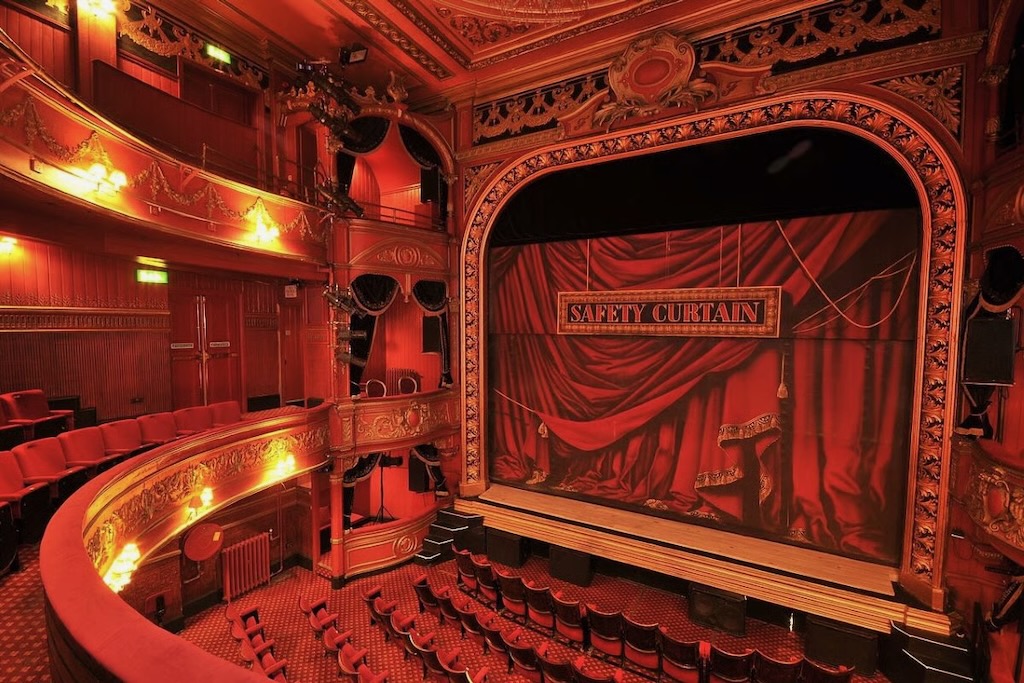
The older town centre is still there on the other side of the railway. Theatre Royal Stratford East is one of the obvious landmarks and has been part of the area’s cultural life for generations, while the surrounding streets remind you that Stratford existed as a busy east London centre long before the Olympic rings appeared.
That side of Stratford is less polished than the Olympic Park, but it is useful to see both.
The station called International
A few minutes away is another station with one of the more optimistic names on the British railway.
Stratford International was built on High Speed 1 with platforms capable of handling international trains. Despite the name, no international passenger service has ever actually called there. Today its high-speed platforms are used by Southeastern domestic services, with the DLR providing a connection to Stratford and the surrounding area.
That may yet change.
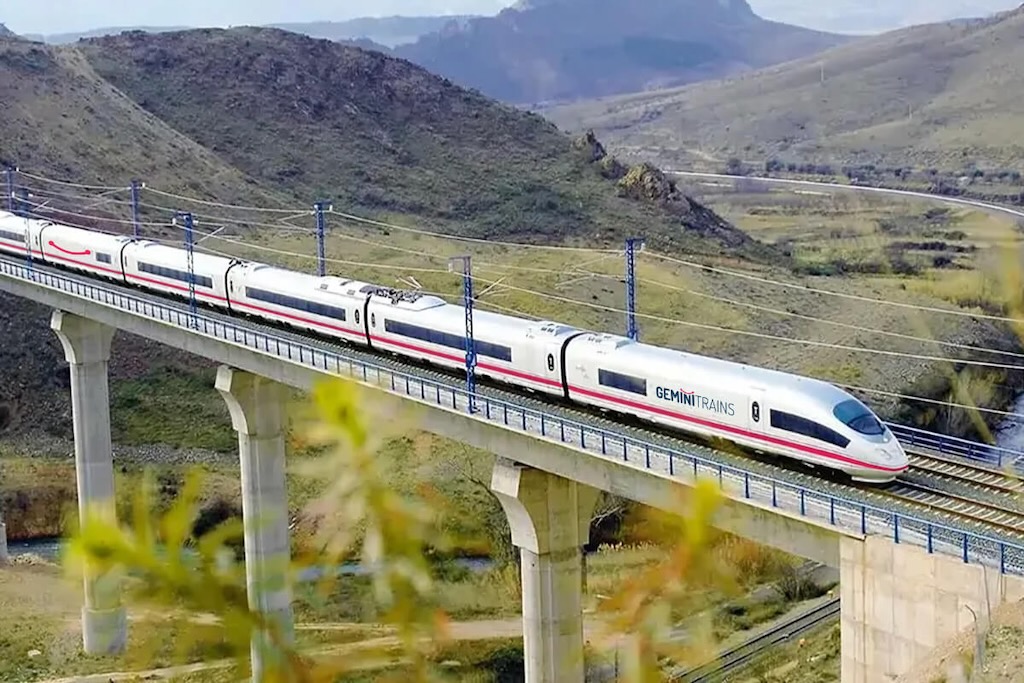
Plans for new competition through the Channel Tunnel have revived discussion about international services from Stratford. Gemini Trains has proposed running from Stratford International via Ebbsfleet to Paris and Brussels from 2029, initially suggesting five return journeys a day to each city, with Cologne mentioned as a possible later extension.
Those remain proposals rather than confirmed future services, but they show that the original idea behind the station has not entirely disappeared.
By train
Stratford’s greatest strength is obviously getting there.
The station combines National Rail with the Elizabeth line, Central line, Jubilee line, DLR and Mildmay line, while Stratford International adds Southeastern high-speed services and another DLR station a short walk away.
That makes Stratford unusually useful whether you are coming from elsewhere in London or arriving from further afield. It also means that once you have finished exploring, there is very little pressure to retrace your steps.
More than somewhere to change trains
Stratford is unlikely to replace central London on anybody’s first visit to the capital, and that is not really the point.
Its appeal is that it tells a different London story. A railway junction became one of the gateways to the 2012 Olympics, the Olympic site became a park and new neighbourhood, and museums, theatres, restaurants and waterways have continued to fill in the spaces around it.
More than 51 million station entries and exits tell you how many people already pass through Stratford. The better question is how many of them ever stop to look around.
Next time you change trains at Stratford, make the interchange part of the journey and give yourself time to explore beyond the platforms.
🚂 Follow the journey
🍽️ Stephen Plume writes about food, trains, and the people in between.
🚆 The Slow Train: Monthly rail stories. Join for my vetted regional food lists
🧳 Travel Kit: Curious about what I pack for the rails? See the list here
Leave a Reply