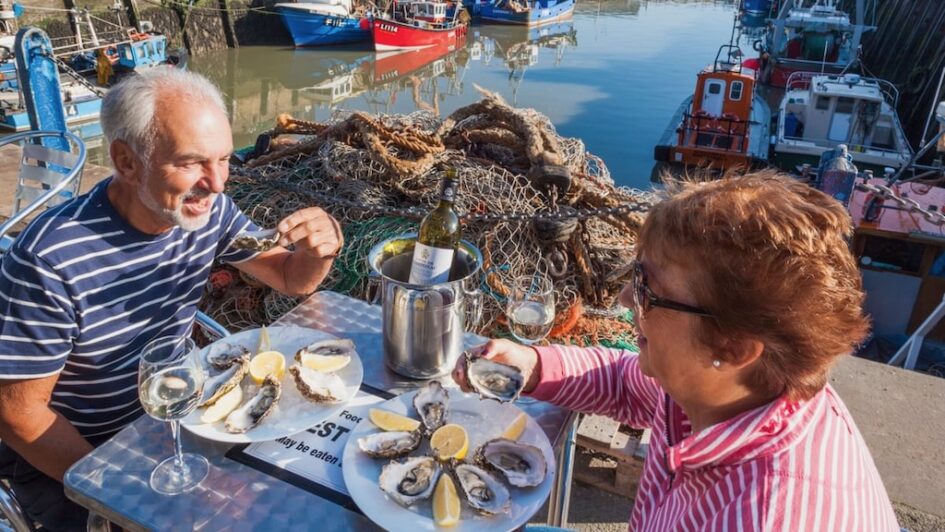
Whitstable is one of those places that feels as though it should be slightly harder to reach. A town of oysters, weathered boards, shingle, working boats and sea air ought, somehow, to involve a car journey, a wrong turn, a fight for parking and a long walk carrying things you did not need to bring.
But Whitstable is better than that. It is a seaside town that understands the railway. Step off the train and the beach is less than ten minutes away. The town does not make you work too hard before it starts giving you what you came for.
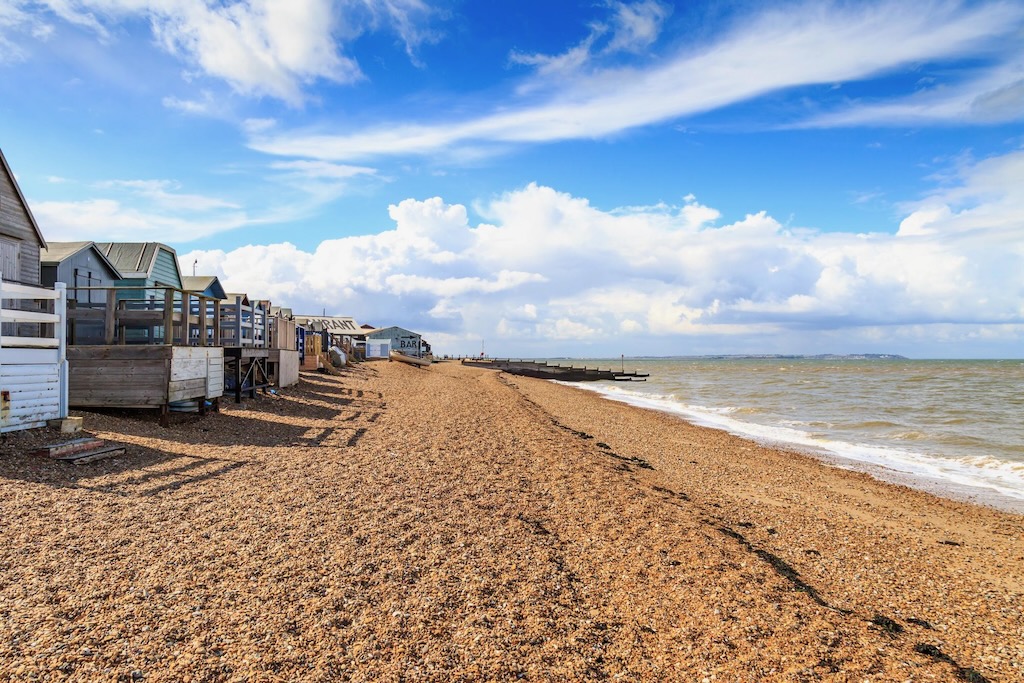
That is part of its appeal. Whitstable is not grand in the way some British seaside towns are grand. It does not arrive with a pier, a sweeping promenade and a sense of municipal theatre. It is smaller, saltier and more direct. You come for the harbour, the oysters, the streets, the weather, the shingle and the slight feeling that the sea has found its way into everything.
Arrival and first impressions
Whitstable station is useful rather than dramatic. That is fine. Some stations are there to be admired. Others are there to release you quickly into somewhere better.
From the station, the route into town is simple. You head down towards the centre, cross into the streets, and soon enough the place begins to narrow and open at the same time. Small shops, cafés, seafood signs, cottages, galleries and the pull of the water.
The first proper aim should be the harbour. Whitstable Harbour gives the town its shape and much of its character. It is still a working harbour, but it also carries the market, the food stalls, the visitors, the gulls and the day-trippers. This is where Whitstable most obviously becomes itself.
The better approach is to resist rushing. Walk towards the water, look at what is open, and let the air and the smell of food do some of the planning.
Why Whitstable works as a destination
Whitstable works because it has a clear identity. Some towns are pleasant but vague. Whitstable is not vague. It is oysters, harbour, beach, weatherboarding, independent shops and a railway story that is much older than most people expect.
The Canterbury and Whitstable Railway opened in 1830 and became known as the Crab and Winkle line. It linked Canterbury with the coast and with Whitstable Harbour in the very early years of public railway travel. That matters because it gives Whitstable more than a nice seaside day out. The railway is not an afterthought here. It is part of the town’s development and part of the reason Whitstable became so accessible.
There is also something pleasing about arriving in a town famous for seafood by a line nicknamed after seafood. Some railway histories are heavy with coal, iron, docks and industry. Whitstable’s has all of that practical purpose, but it also has a name that sounds like lunch.
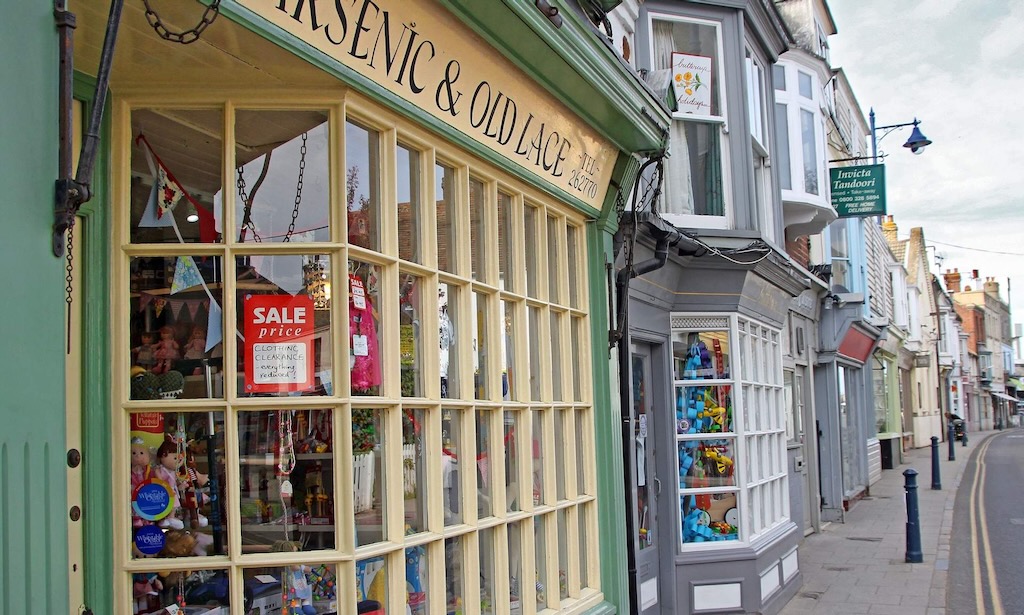
The town itself is compact enough to reward wandering. Harbour Street and the lanes around it are made for slow movement: shops, cafés, little galleries, bakeries, people trying to decide whether it is too early for oysters, and people who have already decided that it is not.
Then there is the beach. Whitstable’s shore is shingle rather than sand, which gives it a different rhythm. You do not really sprawl here. You perch, stroll, eat, look, drink and keep moving. It is a coast for coats over shoulders, paper bags of food, salt on fingers and a pint by the sea.
The harbour, the beach and The Street
The harbour should be the centre of the day. It has enough going on to hold you without turning Whitstable into a checklist. There are seafood places, market stalls, views back along the shore and the working details that stop the town from becoming purely decorative.
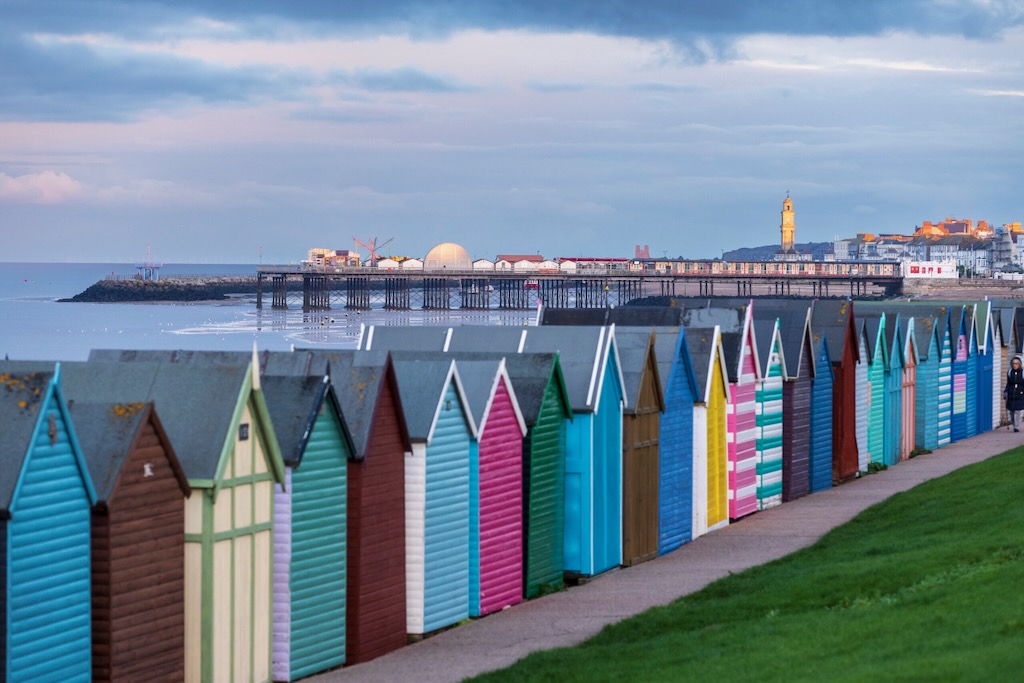
From there, the coast does the rest. Walk west along the beach, or east towards Tankerton if you want a longer stretch. At low tide, look for The Street, the natural shingle spit that reaches out from the shore. It is one of Whitstable’s stranger little gifts: a path that appears when the tide allows it, running out towards the sea and then disappearing again.
That is worth saying carefully. This is not a promenade or a managed attraction. It depends on the tide, the weather and common sense. But that is also why it works. In a town that can get busy, The Street reminds you that the sea is still setting the timetable.
Where to eat
Whitstable’s food reputation rests on oysters, and for once the obvious thing is also the right thing to write about. This is a town where seafood is not a decorative theme. It is the central fact.
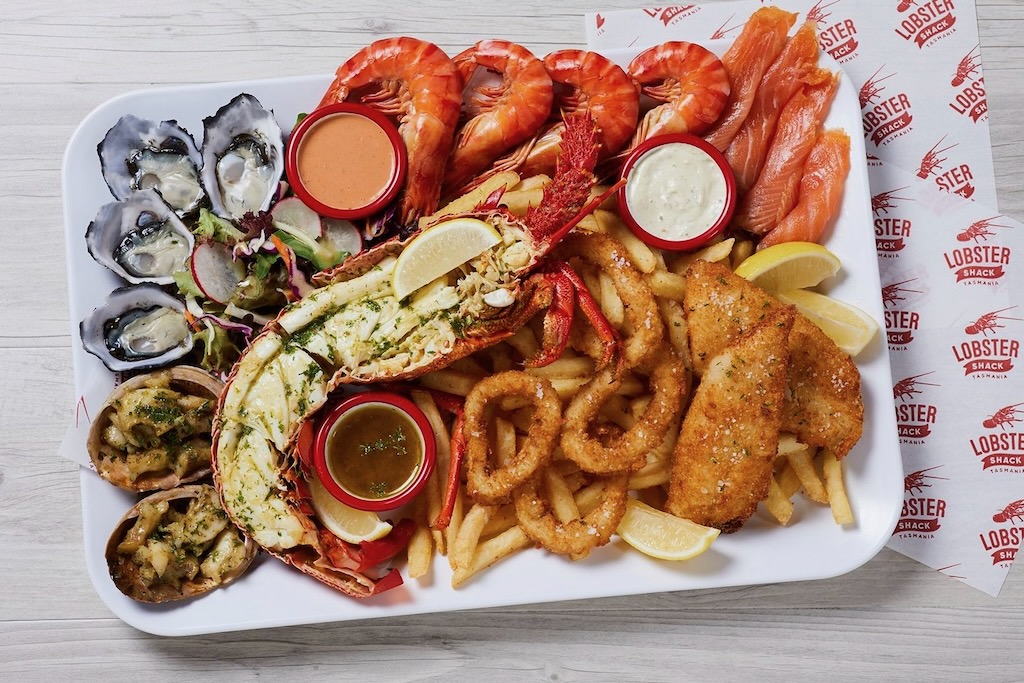
The Lobster Shack, on the East Quay, is one of the clearest seaside choices: oysters, shellfish, lobster, beer and a position close to the water. Wheelers Oyster Bar is the small, famous, pink-fronted option in town, though it is the sort of place where planning ahead matters.
For something more casual, the harbour and seafront do plenty of the work. This is a good town for eating with your hands: oysters, chips, fish, bread, something fried, something cold, something eaten outside before the weather changes its mind.
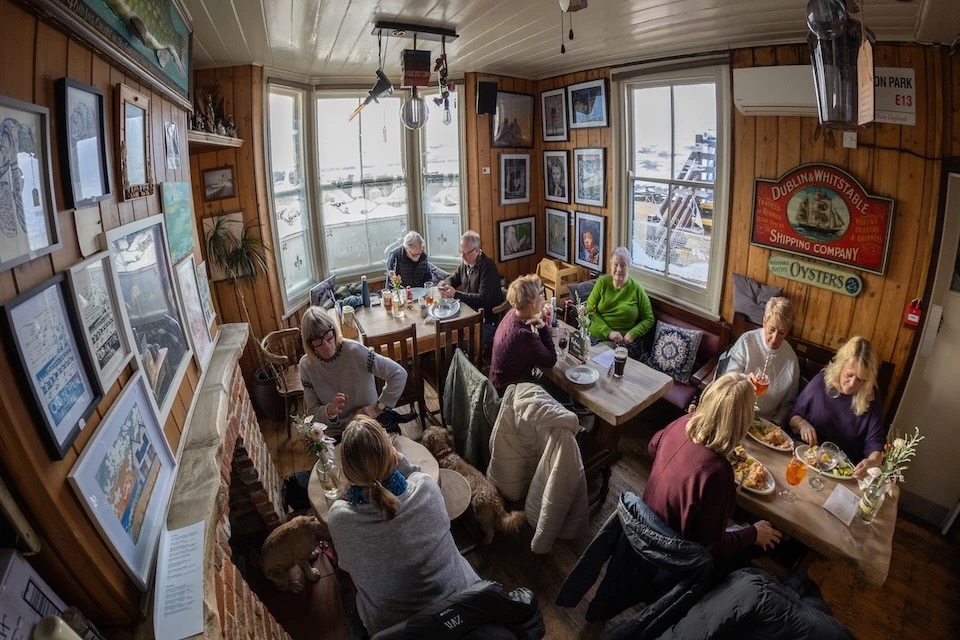
There is also The Old Neptune, sitting by the beach, which gives Whitstable one of the simplest pleasures in British travel: train to sea, sea to pub, pub still close enough to hear the water.
The point is not to over-engineer the meal. Whitstable is better when lunch feels like part of the walk rather than the end of the plan.
Journey times
Whitstable is served by Southeastern, with trains from London and connections across Kent.
- London St Pancras International to Whitstable: around 1 hour 15 minutes on the fastest high-speed services.
- London Victoria to Whitstable: around 1 hour 20 minutes on many direct services.
- Canterbury West to Whitstable: around 20 minutes by train, depending on service.
- Ramsgate to Whitstable: around 30 to 40 minutes by train, depending on service.
The useful thing is how quickly the railway turns into the town. This is not a place where the station leaves you stranded on the edge of the story. The station is part of the day.
Final thought
Whitstable is easy to romanticise, but it does not need too much help. The best things about it are already there: the harbour, the oysters, the shingle, the railway history, the beach, the little streets and the feeling that everything is slightly shaped by salt.
It is not the grandest seaside arrival in Britain. It is not trying to be. Its strength is that the train brings you close enough to smell the sea before you have had time to wonder whether the journey was worth it.
Step off, walk down, eat oysters, follow the harbour, check the tide, and let the town do what it has been doing for nearly two hundred years: turning a railway arrival into a day by the water.

🚂 Follow the journey
🍽️ Stephen Plume writes about food, trains, and the people in between.
🚆 The Slow Train: Monthly rail stories. Join for my vetted regional food lists
🧳 Travel Kit: Curious about what I pack for the rails? See the list here




Leave a Reply