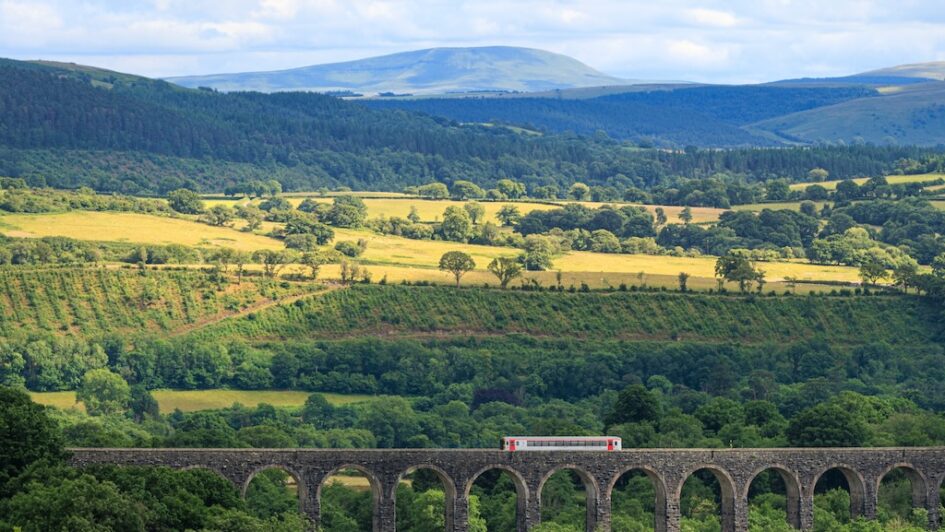
There is a moment on some train journeys when the railway seems to change character. The train leaves the main line, the speed drops, the stations get smaller and the journey starts to feel much closer to the landscape around it. In Wales, some of the best examples come where the network peels away from the faster routes and heads into valleys, along estuaries and towards places that would otherwise feel much harder to reach.
The Conwy Valley Line is one of the clearest examples. From Llandudno Junction, the railway heads south towards Blaenau Ffestiniog, passing through places including Llanrwst, Betws-y-Coed and Dolwyddelan before reaching the former slate town at the end of the line. Transport for Wales still publishes it as a distinct Llandudno to Blaenau Ffestiniog route, and even on the network map it feels like a line with its own identity.
What makes a branch line different is not simply that it is slower. The scale changes. The railway feels less anonymous. Stations become places rather than interchange points, and the route begins to explain the landscape as it moves through it. On the Conwy Valley Line, the journey steadily leaves the coast behind and moves inland towards Snowdonia, with the railway threading through communities that feel very different from those on the main line a few miles away.
The same thing happens further south on the Cambrian network. At Machynlleth, one route heads west towards Aberystwyth while another follows the coast towards Pwllheli. The Cambrian Coast Line serves places including Tywyn, Barmouth, Harlech, Porthmadog and Criccieth before reaching Pwllheli, and the route is still promoted by Transport for Wales as a journey worth making in its own right.
That is perhaps the real appeal of the branch line. The main line is designed to get you somewhere efficiently. A branch line often makes you feel that the route itself matters. You notice the river beside the track, the houses turning their backs towards the railway, the small platforms serving places you had only ever seen on a map. The journey becomes more intimate, and sometimes more memorable, precisely because it is doing less.
There is also something reassuringly useful about these lines. They are not museum pieces or heritage attractions. They remain working railways, carrying commuters, students, walkers, day-trippers and people simply trying to get home. That is part of what makes them special. The romance only works because the railway still has a job to do.
Wales is particularly good at this. Its geography forces the railway to follow valleys, skirt hillsides and cling to stretches of coast, and the result is a network where some of the quieter lines can feel far more distinctive than the busiest ones. The railway stops behaving like a corridor and starts feeling like part of the place.
The main line gets you across the country.
The branch line is often where you begin to notice it.

Leave a Reply