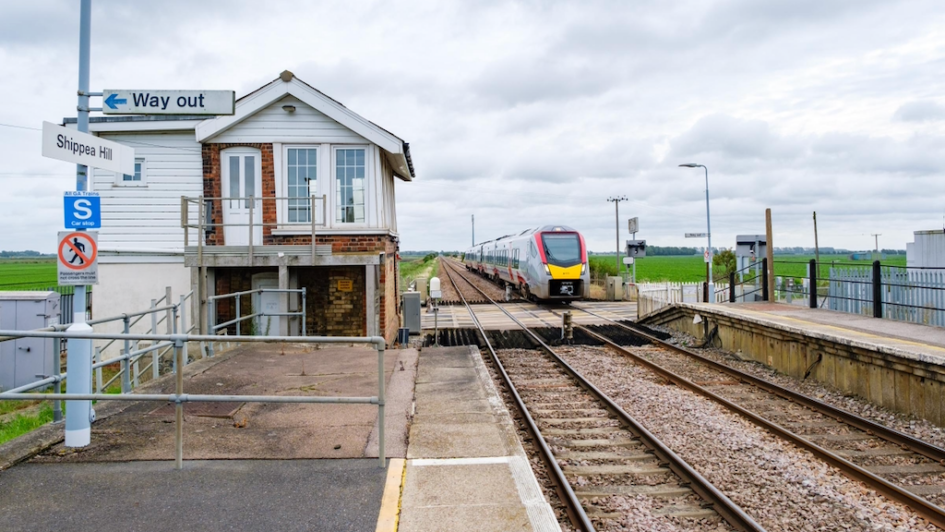
Shippea Hill is famous because almost nobody uses it. There is no town centre waiting outside, no café, no pub and no collection of attractions requiring a weekend itinerary. There is a road, a level crossing, enormous Fenland skies and a railway station that recorded just 76 passenger entries and exits in the whole of 2024/25.
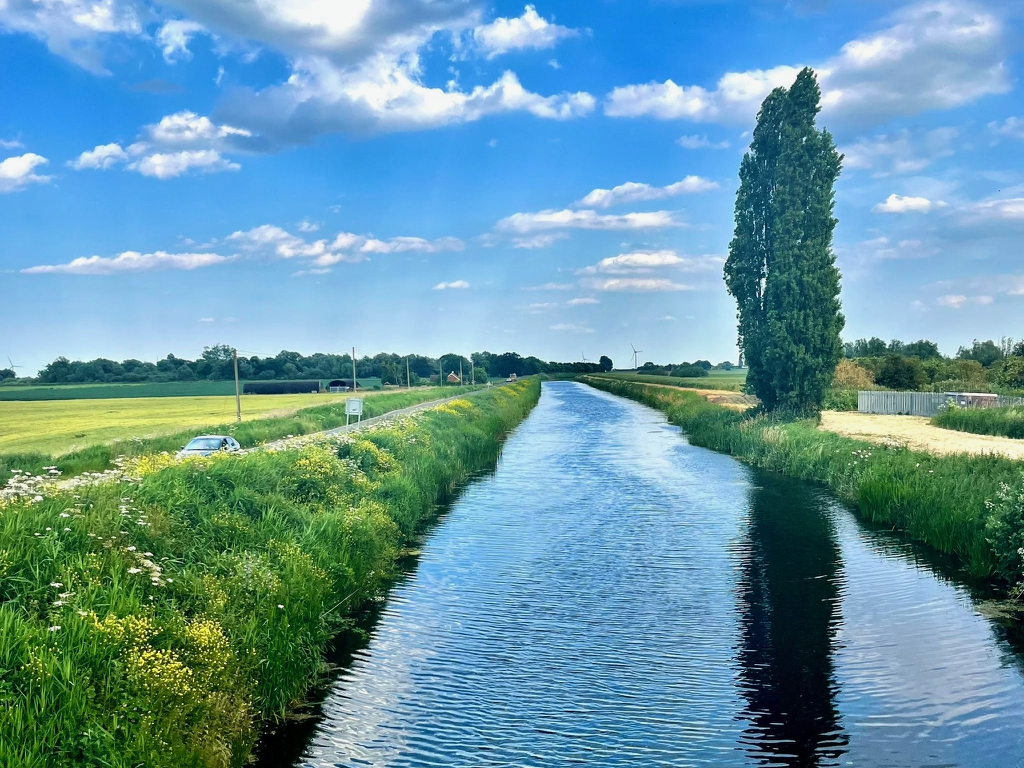
That made Shippea Hill the second least-used station in Britain. Go back to 2015/16 and the figure was just 12. One a month. You could have invited every passenger from the entire year to dinner and still had room around the table.
The numbers are extraordinary, but they are not really the most interesting thing about the station. Shippea Hill makes much more sense once you stop looking at it as a passenger stop and start looking at the landscape around it.
Why is there a station here?
Shippea Hill opened on 30 July 1845 as Mildenhall Road. It was renamed Burnt Fen in 1885 and became Shippea Hill in 1904.
The surrounding landscape was, and remains, intensely agricultural. Historic maps show narrow-gauge horse-drawn tramways running from the station yard into the Hiam Estate, bringing produce from the fields towards the main railway. There was also a private branch running east from the station towards a chicory factory, itself connected to agricultural tramways serving the Chivers Estate.
For much of its history, Shippea Hill therefore made sense as an agricultural railhead. Fruit and vegetables could be moved from the surrounding land towards the railway, then onwards to larger markets. There is evidence of fruit trains running from Shippea Hill towards London for Covent Garden.
The station that now struggles to attract a hundred passenger movements a year once sat within a much busier network of food production and transport.
The landscape behind the food
The Fens are among the most heavily engineered landscapes in Britain. Much of Burnt Fen lies at or below sea level and depends on drainage and pumping to remain productive, but once drained the dark Fen soils proved exceptionally fertile.
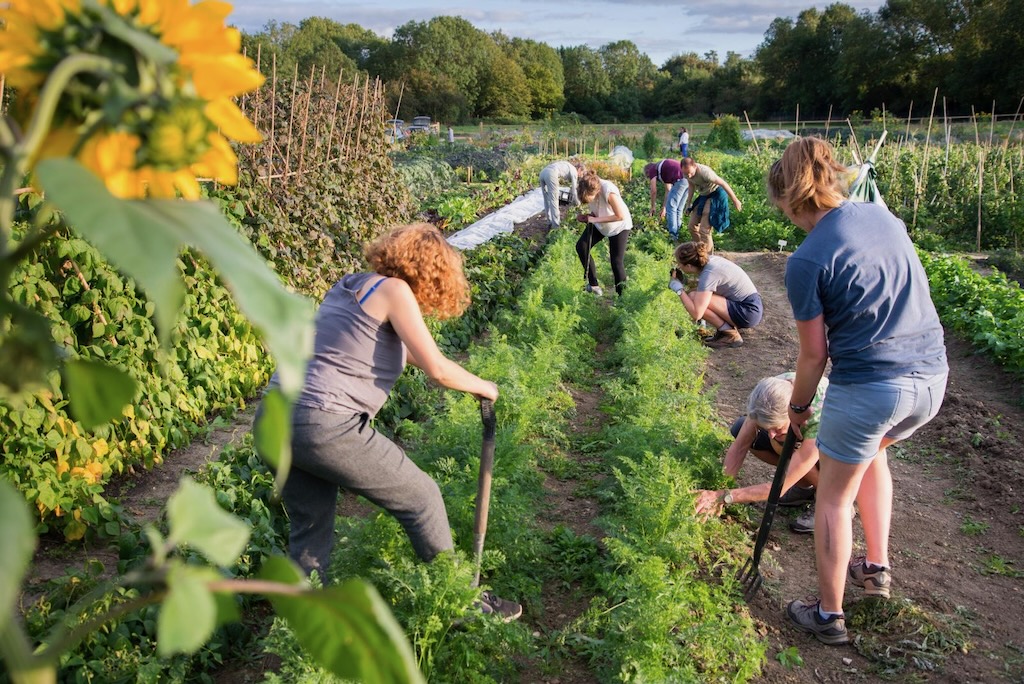
That fertility helped turn this part of eastern England into one of the country’s great agricultural areas. Before widespread road haulage, railways transformed what could be grown commercially by making it possible to move large quantities of perishable produce quickly towards urban markets.
Shippea Hill was part of that system. The old tramways matter because they explain what the station was for. This was not a remote stop built for curious railway enthusiasts. It was connected to farms, estates and food production in the surrounding countryside.
Today most of that railway infrastructure has disappeared. The fields have not.
What do you eat at Shippea Hill?
There is one obvious complication with visiting Shippea Hill for The Hungry Passenger: there is nowhere to buy anything.
There is no station café, no restaurant, no pub and no buffet. So lunch has to arrive with you, which actually feels rather appropriate for a station so closely tied to the movement of food.
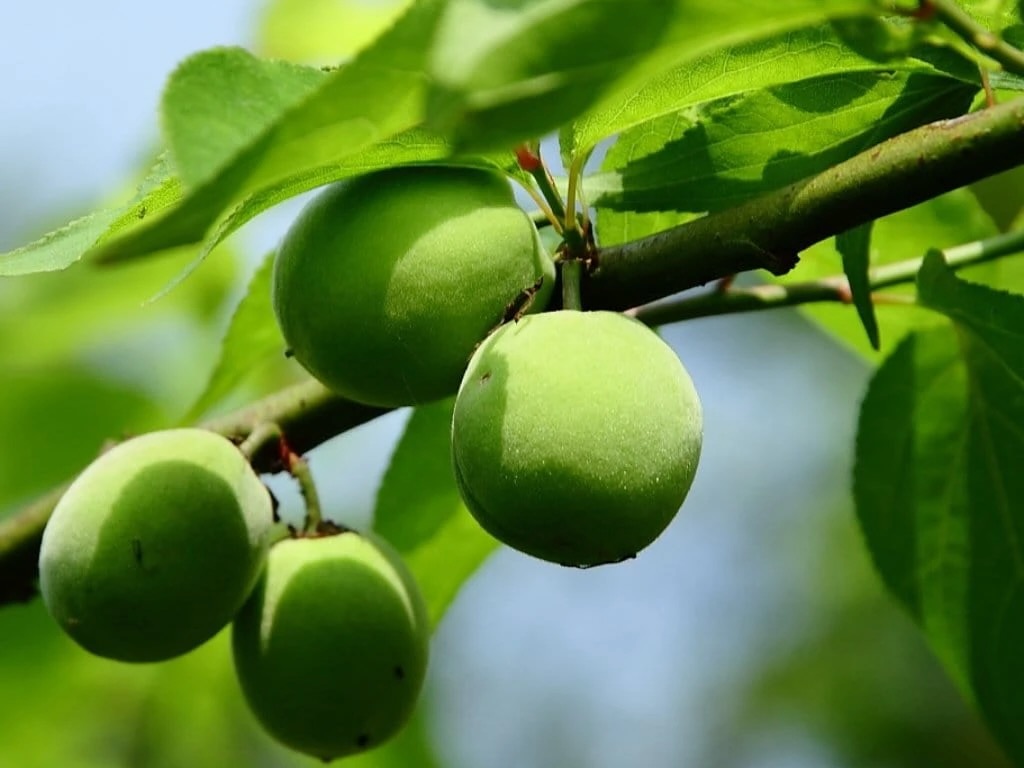
A Fenland picnic makes more sense here than trying to send you miles away in search of a restaurant. If you are travelling in late August, keep an eye out for Cambridge Gages. The small green fruit has long associations with Cambridgeshire and ripens around late August and early September.
Add some decent bread, cheese and perhaps a pork pie and you have everything you really need. There is also Fenland Celery, one of the area’s best-known traditional foods, although its season comes later in the year.
The irony is quite pleasing. Shippea Hill has nowhere to buy lunch, yet almost everything around you is shaped by food production.
The hill that barely exists
The name Shippea Hill promises slightly more dramatic scenery than the reality.
This is not somewhere to bring climbing equipment. The station lies within Burnt Fen, where the landscape is remarkably low and flat. Shippea Hill occupies one of the small areas of slightly higher ground, but the overwhelming impression when you arrive is not height. It is space.
Fields stretch away in huge blocks, drainage channels divide the landscape and roads and railway lines disappear towards a distant horizon. There are very few places in Britain where a station feels so completely exposed to the landscape around it.
Most stations announce a place. Shippea Hill gives you a view.
Why come here at all?
There is no conventional day-trip itinerary for Shippea Hill, and trying to invent one would miss the point. You do not get off because there is a cathedral ten minutes away or because somebody has opened an exceptional restaurant beside the station.
You come because the railway itself is the attraction.
Once the train leaves, the place becomes remarkably still. You are standing beside a railway that has crossed this landscape since 1845, looking out over fields that once fed directly into the railway through sidings, private branches and agricultural tramways.
Most railway journeys encourage us to think only about the places at either end. Shippea Hill makes you notice what lies between them: farmland, old industries, forgotten infrastructure and stations that have survived long after the reasons for building them have changed.
By train
Shippea Hill is on the Breckland Line between Ely and Norwich.
Services are extremely limited, so this is one journey where checking the current timetable before setting out really matters. The station is unstaffed and has no ticket office, waiting room, toilets or buffet.
Bring lunch.
From farm produce to 76 passengers
The number 76 is what makes Shippea Hill famous today, but it is probably the least interesting thing about it.
The station once sat within an agricultural transport system that connected fields, estates and food production with the national railway. Horse-drawn tramways brought produce towards the platforms, a private railway served a chicory factory and fruit left for London.
Road transport eventually replaced much of that traffic, the agricultural railway infrastructure disappeared and Shippea Hill slowly became the oddity it is today.
The station remained, the farms remained and the passengers largely disappeared.
That is what makes Shippea Hill worth the journey. Not because there is very much there, but because once you understand what used to be there, the emptiness starts to make sense.
🚂 Follow the journey
🍽️ Stephen Plume writes about food, trains, and the people in between.
🚆 The Slow Train: Monthly rail stories. Join for my vetted regional food lists
🧳 Travel Kit: Curious about what I pack for the rails? See the list here
Leave a Reply