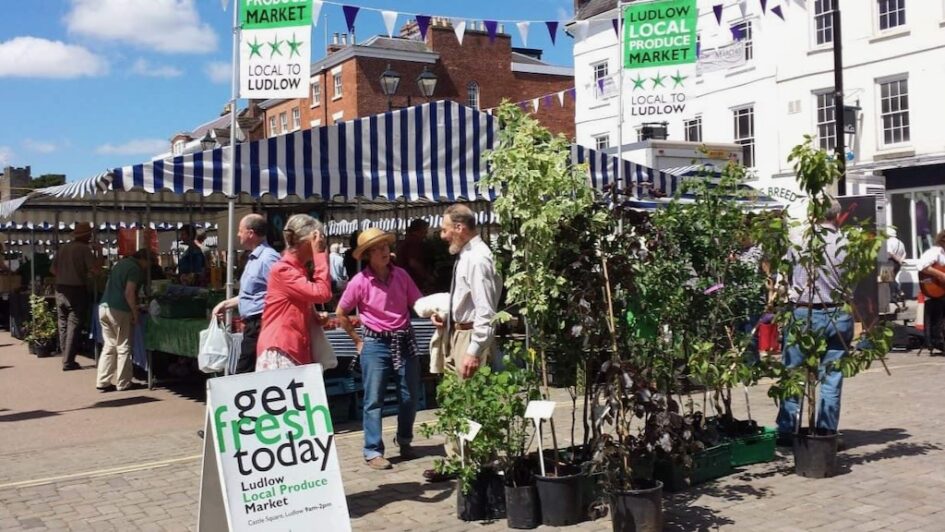
Ludlow is one of those towns that makes sense almost immediately. Leave the station, walk uphill towards the centre and within fifteen minutes you are surrounded by timber-framed buildings, independent shops, a market that has been trading for centuries and one of the finest medieval castles in England. The River Teme curls around the town below and food is not something added to the visitor experience afterwards. It is part of Ludlow’s identity, which is one of the reasons the town works so well as a railway day trip.
Ludlow sits in south Shropshire, close to the Welsh border, on the railway between Shrewsbury and Hereford. The town grew around its Norman castle and later became one of the most important administrative centres on the Welsh Marches. Today the castle remains the obvious landmark, but Ludlow is much more interesting when you start looking beyond the walls and notice how closely the market, the food culture, the pubs and the railway all sit together.
A town built around a market
Ludlow Market still sits at the heart of the town and the wider food culture around it feels unusually durable. Regular markets continue through the year, with food producers, crafts, antiques and makers all appearing around the square, while the surrounding streets remain full of independent shops and places to eat. The result is a town where food does not feel like a themed attraction invented for visitors. It feels woven into everyday life.
That helps explain why Ludlow Food Festival became so important. Plenty of towns now have food festivals, but Ludlow was doing this long before almost everyone else. The festival grew out of something already present in the town: local producers, butchers, brewers, market traders and a community with a serious relationship with food.
Ludlow Food Festival
The Ludlow Food Festival usually takes place on the second weekend of September and has become one of the defining events in the town’s calendar. Ludlow Castle becomes the centre of the action, with independent producers, demonstrations, talks, tastings, workshops and plenty of food and drink, while the wider town gets pulled into the atmosphere as well.
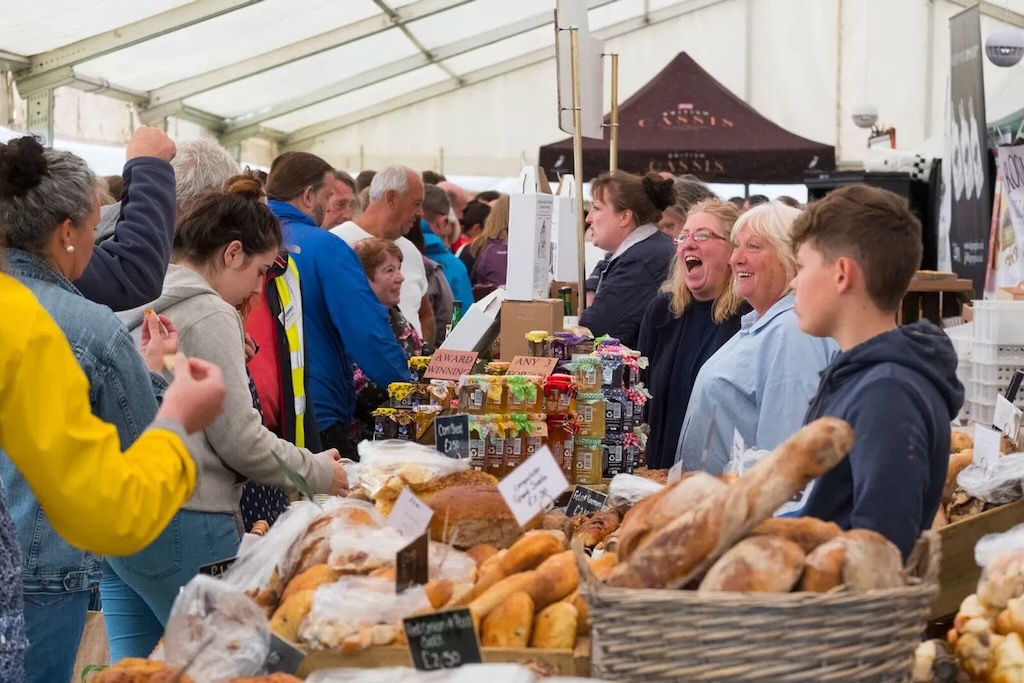
That is one of the things Ludlow does particularly well. The festival does not feel sealed off behind the castle walls. It spills into the streets, pubs, shops and market, so the whole town becomes part of the event rather than simply providing the backdrop.
For years, though, one of the things that made the festival particularly memorable was the sausage trail.
The sausage trail
The sausage trail was one of those brilliantly specific traditions that made Ludlow Food Festival feel different. Local butchers created festival sausages, visitors worked their way around town tasting them, and there was both a public vote and an expert judging panel. The experts’ choices were then discussed and announced on the main stage, which became one of the highlights of the weekend.
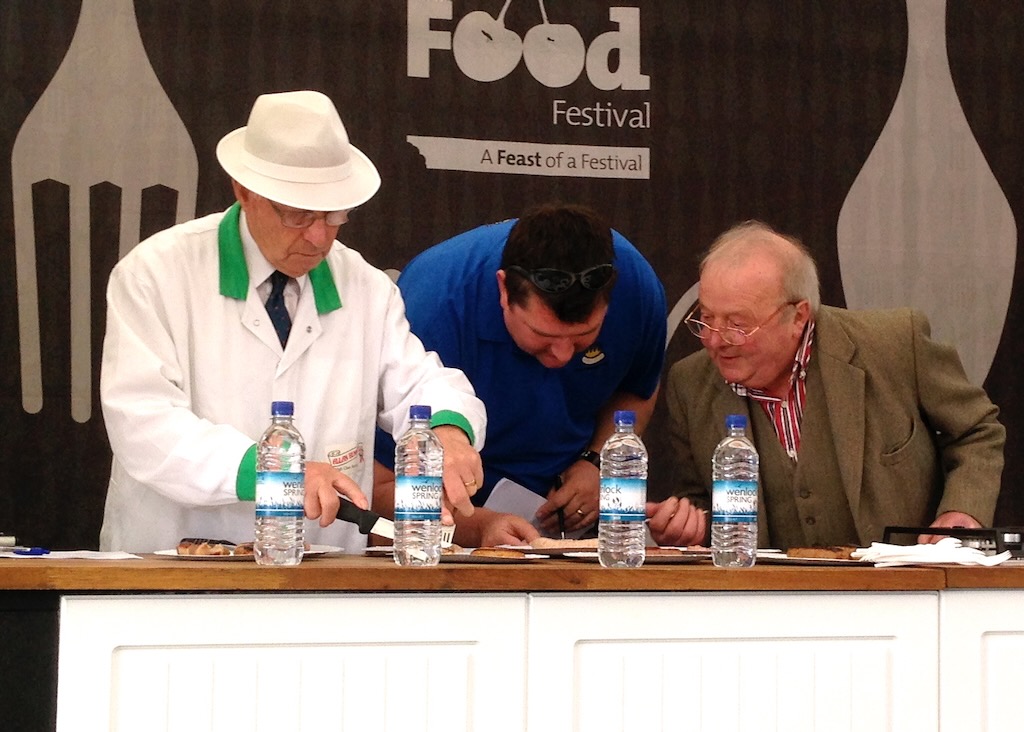
It was also a regular fixture for The Sausage King, long before The Hungry Passenger existed. We came back to Ludlow year after year and the sausage judging became one of those things we always looked forward to. There was something wonderful about watching people have entirely serious discussions about seasoning, texture, balance and flavour in pursuit of the best sausage in town.
The current festival programme no longer appears to include the sausage trail, so it may now belong more to Ludlow Food Festival history than the present day. That is a shame, because for a long time it was one of the things that made the event feel unmistakably Ludlow. A food festival anywhere can have stalls and demonstrations. Ludlow had a town-wide sausage competition and a crowd waiting to hear the experts’ verdict on the main stage.
Start beside the railway
One of the best things about arriving in Ludlow by train is that the food and drink starts almost immediately. Ludlow Brewing Company occupies the restored former railway goods shed beside the station, making it one of the most satisfying first or last stops in town.
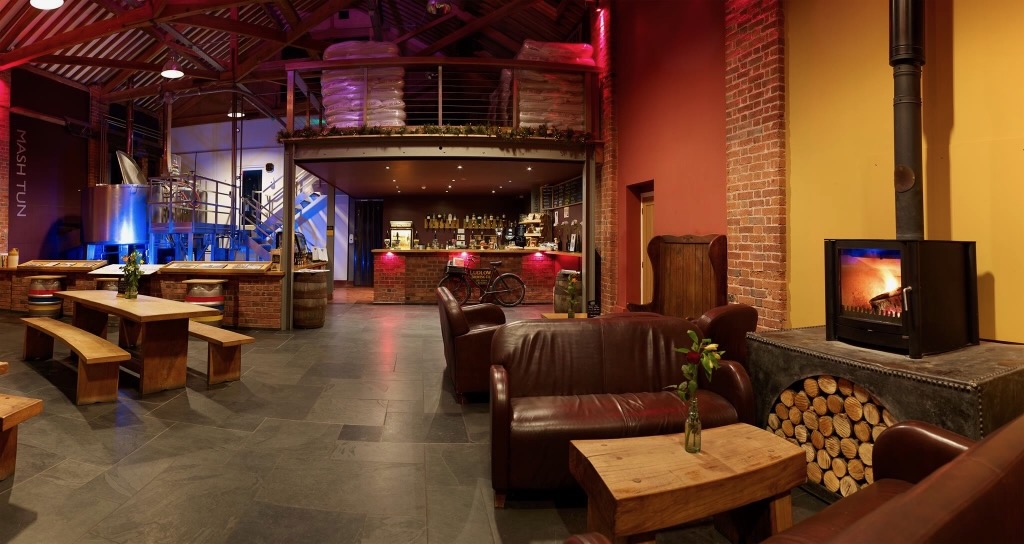
There is something particularly appropriate about arriving by train and having a drink in a building that once handled railway freight. The railway used to move goods through Ludlow; now the old shed has become part of the town’s food and drink story instead.
It is also a useful reminder that Ludlow works as a destination because the railway is not detached from the town. You step off the train and almost immediately feel as though you have arrived somewhere, rather than beginning another twenty-minute transfer.
The castle
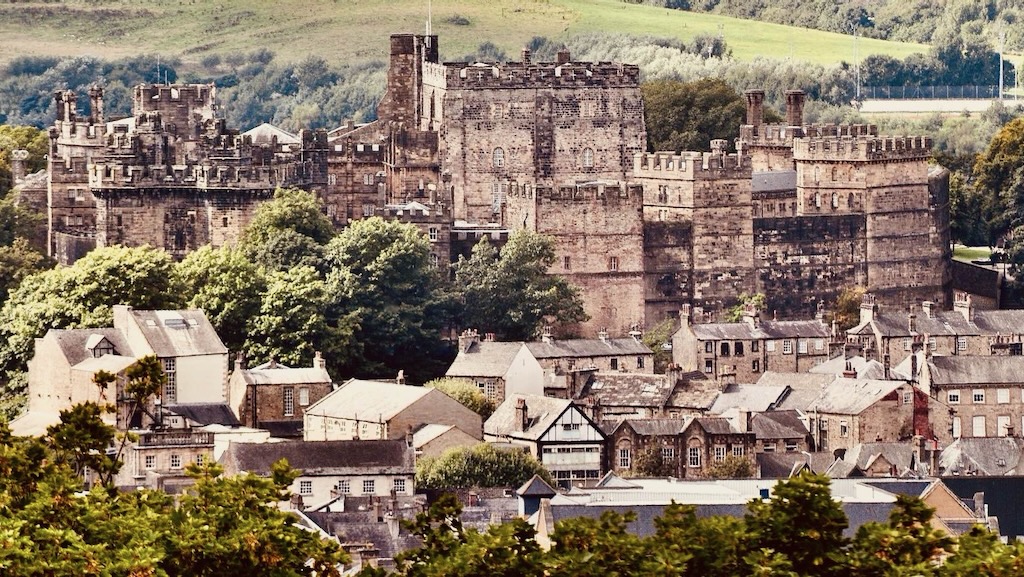
Ludlow Castle dominates the centre of town and remains one of the great Marches castles. Its position is part of the appeal. It does not sit outside town behind a large car park or on some detached heritage site. It opens directly onto the market square and feels physically embedded in Ludlow.
During the food festival, those medieval walls fill with producers, kitchens, stages and crowds. Outside festival weekend, the castle is still worth exploring in its own right, but it is the relationship between castle, market and streets that really makes Ludlow work. You can move from railway to brewery, from market to castle, and from food shop to pub without the day ever feeling fragmented.
Walk downhill afterwards
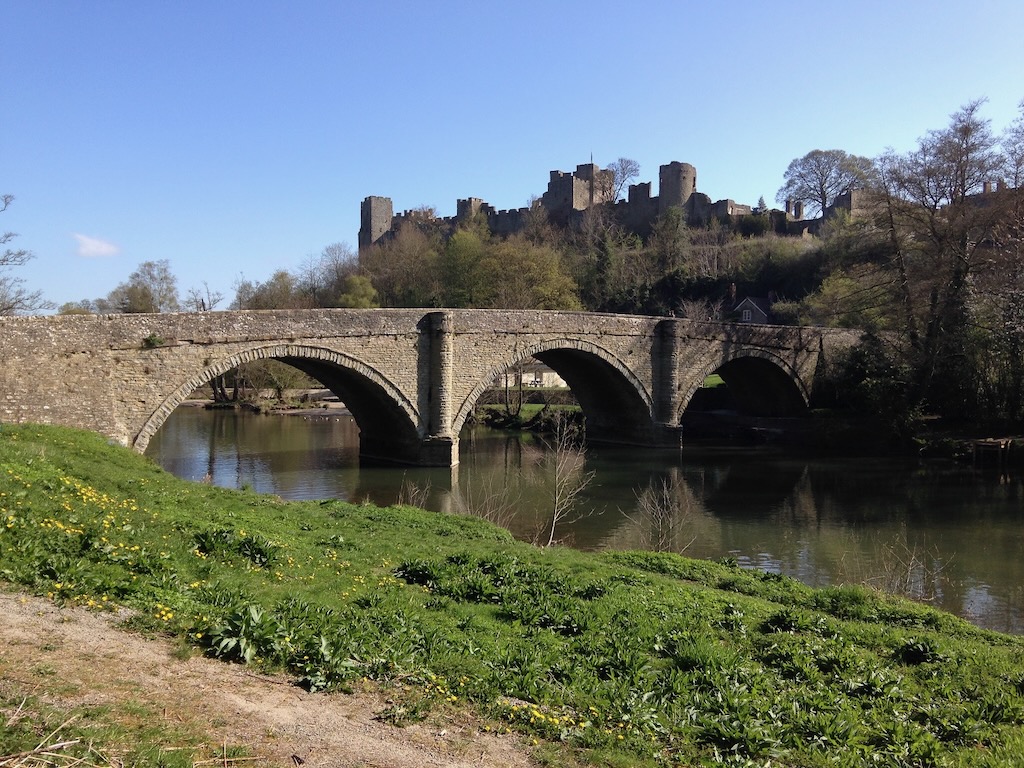
After the market and castle, head downhill towards the River Teme. The walk around Dinham Bridge and the river gives you one of the classic views back towards Ludlow, with the castle above the trees and the town rising behind it.
It is also a useful counterweight to a day spent eating. Ludlow is compact enough that you do not need to build an elaborate itinerary around it. The town rewards wandering. Follow the streets, stop where something looks good, head down towards the river and then climb back into the centre when you are ready for something else.
What to eat
Normally this is where I would tell you to go to one particular restaurant, but Ludlow makes that difficult because the town’s food culture is too broad for a single answer. On a normal weekend I would start with the market, look at the independent food shops and then work out where lunch happens from there.
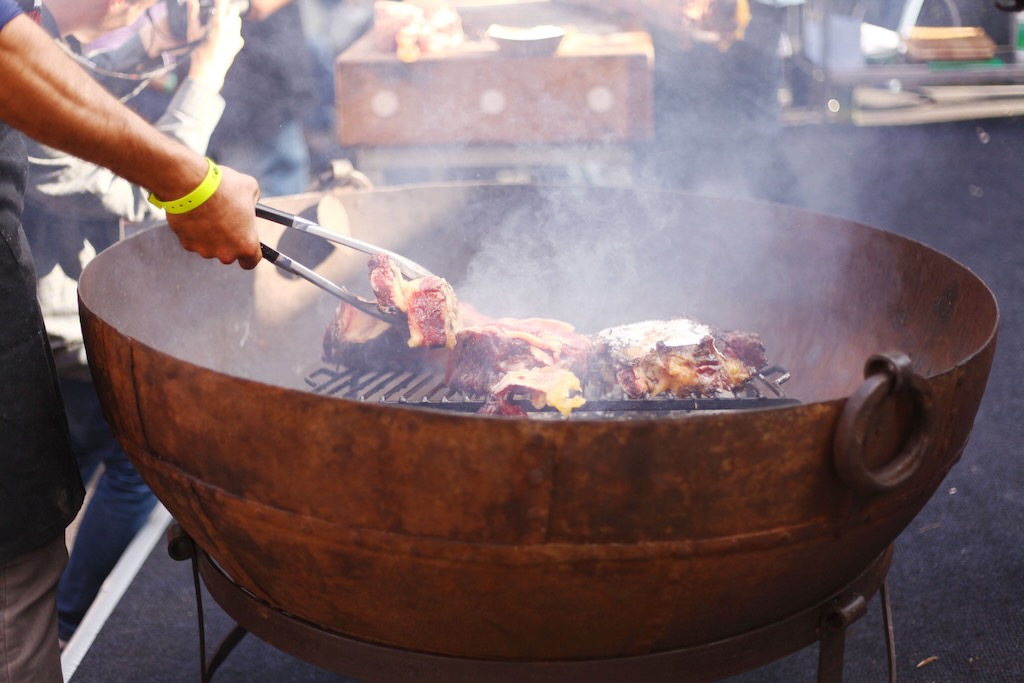
During Food Festival weekend, trying to impose a conventional restaurant itinerary almost misses the point. The pleasure is in trying what is being made, discovering a producer you have never heard of, having a pint in the old railway goods shed and letting the day take shape around whatever looks good.
THE SLOW TRAIN
Enjoying The Hungry Passenger?
The Slow Train is my monthly email about food, railways and the stories found along the way. Find out more about The Slow Train and join the next departure.
That approach suits Ludlow because the town is at its best when you do not over-plan it. The food is everywhere, the distances are short and the next interesting thing is usually only a few minutes away.
By train
Ludlow station is on the line between Shrewsbury and Hereford. From the station, Ludlow Brewing Company is almost next door and the historic centre is roughly ten to fifteen minutes away on foot.
Once you reach the market square, the castle, market, shops, pubs and most of the town centre are easy to explore without a car. That is part of Ludlow’s appeal. It feels like a proper destination, but not one that requires a logistical operation to enjoy.
The town that takes food seriously
Lots of towns now have food festivals, but Ludlow had one before almost everyone else. What makes it endure is that the festival grew out of something that was already there: markets, butchers, brewers, producers and a town with a serious relationship with food.
For years, one of my favourite moments was waiting with the other sausage experts to announce the choices on the main stage. The sausage trail may no longer be part of the current programme, but the memory of it still says something important about Ludlow. This is a town where judging sausages could become a major event and where that somehow felt completely natural.
Come by train, arrive hungry and leave enough time before the journey home for one final stop in the old railway goods shed. Ludlow understands that food should be part of the journey, not something waiting at the end of it.
🚂 Follow the journey
🍽️ Stephen Plume writes about food, trains, and the people in between.
🚆 The Slow Train: Monthly rail stories. Join for my vetted regional food lists
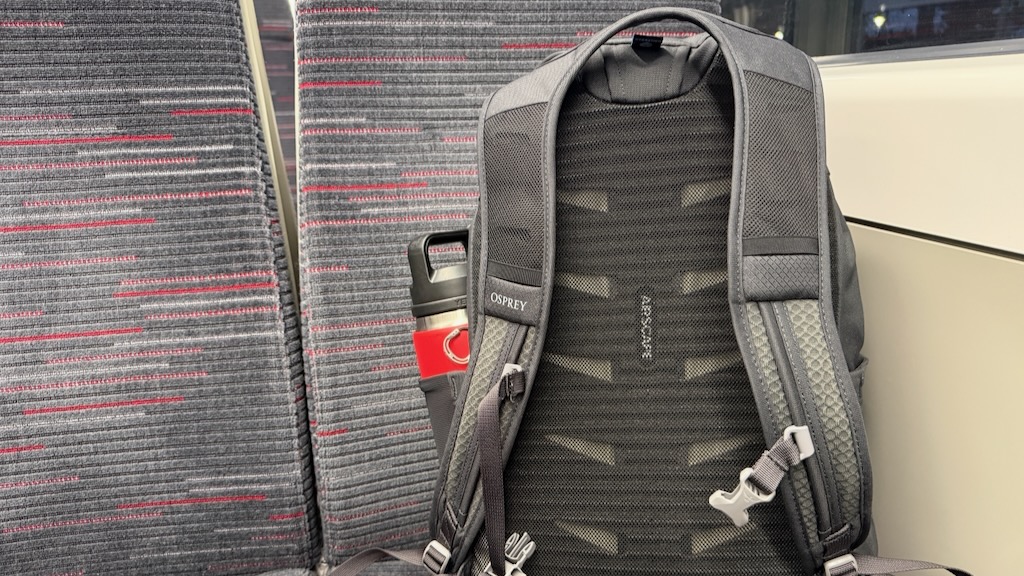
🧳 Travel Kit: Curious about what I pack for the rails? See the list here
Leave a Reply