There are few places in Scotland where so much history is packed into such a small area. Stirling sits at a natural crossing point of the River Forth, overlooked by a magnificent castle and surrounded by landscapes that have witnessed some of the most important events in Scottish history. It is a city of cobbled streets, medieval buildings, independent cafés and dramatic views, and much of it can be explored on foot from the railway station.
For anyone travelling through central Scotland, Stirling makes an excellent day trip or a worthwhile stop on a longer railway journey. Glasgow and Edinburgh are both within easy reach, while trains heading north open up the possibility of continuing towards Perth, Dundee or the Highlands.
Arriving in Stirling by train
Stirling railway station is conveniently positioned on the edge of the city centre. The station is an attractive Victorian building, and stepping outside brings you almost immediately into the streets of modern Stirling.
There are regular rail connections with Glasgow Queen Street and Edinburgh, as well as services towards Perth, Dundee and destinations further north. The city is particularly well placed for exploring Scotland by train, sitting at an important junction between the Central Belt and the routes towards the Highlands.
From the station, the Old Town rises steadily towards Stirling Castle. It is only around half a mile to the castle, although the uphill walk is worth allowing a little extra time for. Fortunately, there are plenty of opportunities to stop for coffee or something to eat along the way.
A city shaped by Scottish history
Stirling Castle dominates the skyline from its position on a volcanic crag. For centuries, control of Stirling was strategically important because of its position between the Highlands and Lowlands and its proximity to historic crossing points on the River Forth.
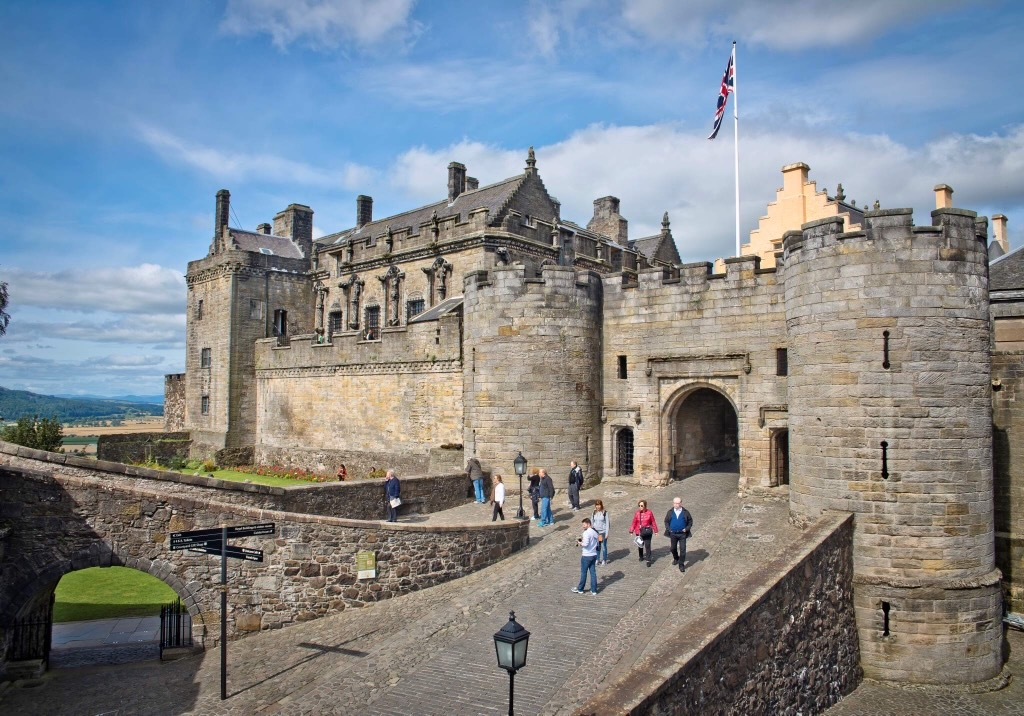
The castle was one of Scotland’s principal royal residences, and its surviving buildings offer a fascinating introduction to the country’s history. The Royal Palace, Great Hall and Chapel Royal are among the highlights, while the views across the surrounding countryside are spectacular.
Mary, Queen of Scots spent part of her childhood at Stirling Castle and was crowned there in 1543. The castle’s restored royal apartments help bring the Renaissance court to life, offering a rather different picture of royal Scotland from the austere fortress that might first come to mind.
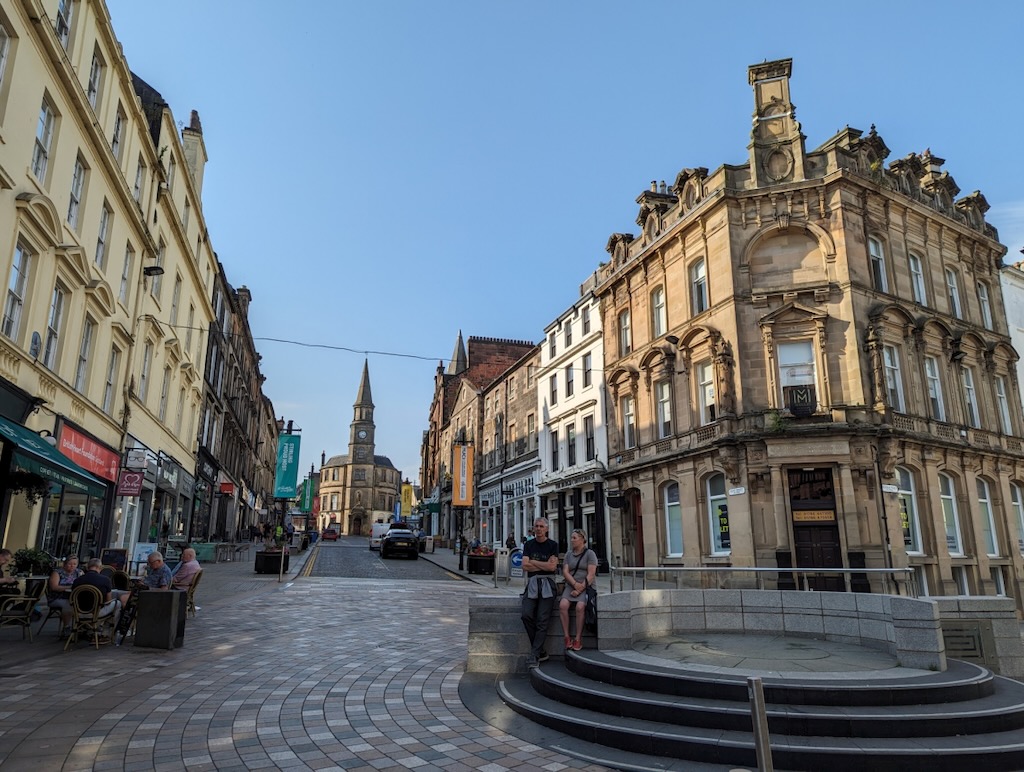
The walk up through the Old Town is almost as enjoyable as the castle itself. Narrow streets, old stone buildings and unexpected views make this an area worth exploring slowly.
Close to the castle stands the Church of the Holy Rude, one of Stirling’s most important historic buildings. James VI was crowned here in 1567, making it one of the few surviving churches in Britain associated with a royal coronation. Nearby, the Old Town Jail offers a very different perspective on the city’s past, telling the story of crime and punishment in Victorian Scotland.
Coffee and something sweet
A good railway day out needs somewhere for coffee, preferably with a slice of cake or something freshly baked.
Darnley Coffee House on Bow Street is particularly well positioned for exploring the Old Town. Tucked into a historic stone building below the castle, it offers a welcome opportunity to stop before or after tackling the hill. It is the sort of place that suits Stirling perfectly, with a setting that feels part of the city’s history rather than separate from it.
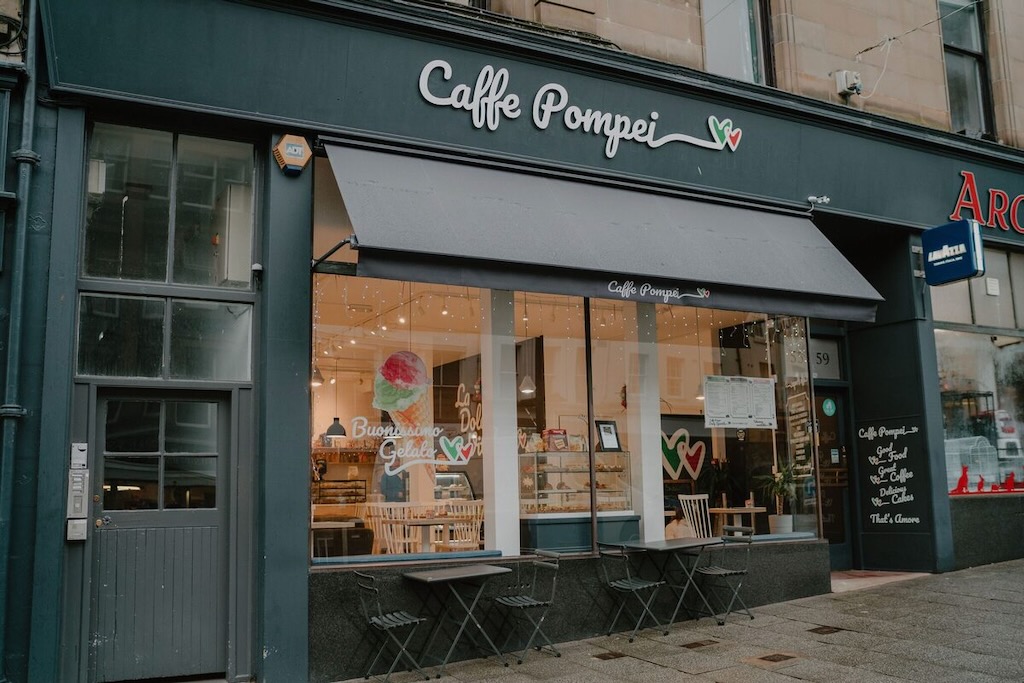
For something closer to the shopping streets, Caffè Pompei on King Street offers an Italian-style alternative, with coffee and light lunches. It is conveniently located for anyone arriving by train and wanting to eat before heading uphill.
Another option is Unorthodox Roaster on Friars Street. With its focus on speciality coffee, it offers a more contemporary contrast to Stirling’s traditional tearooms and historic surroundings.
Lunch in the shadow of the castle
Stirling’s food scene offers plenty of choice, from traditional Scottish pub meals to independent cafés and international restaurants.
For a lunch that feels particularly connected to the city’s setting, The Portcullis is difficult to overlook. Situated close to the castle esplanade, this historic inn is a natural stopping point after exploring the castle and surrounding streets. Its traditional pub atmosphere makes it a good choice for a relaxed meal, particularly on a chilly Scottish afternoon.
THE SLOW TRAIN
Enjoying The Hungry Passenger?
The Slow Train is my monthly email about food, railways and the stories found along the way. Find out more about The Slow Train and join the next departure.
If you would rather head back towards the city centre, Stirling has a wide range of places to eat around King Street, Port Street and the neighbouring lanes.

Green Gates on Queen Street provides an Indian dining option, while the cafés around the Old Town offer lighter alternatives for anyone planning to spend the afternoon exploring.
There is no need to rush lunch in Stirling. The city is compact enough that you can take your time over a meal without sacrificing the opportunity to see its main attractions.
Beyond the Old Town
Although the castle is Stirling’s most famous landmark, there is considerably more to discover.
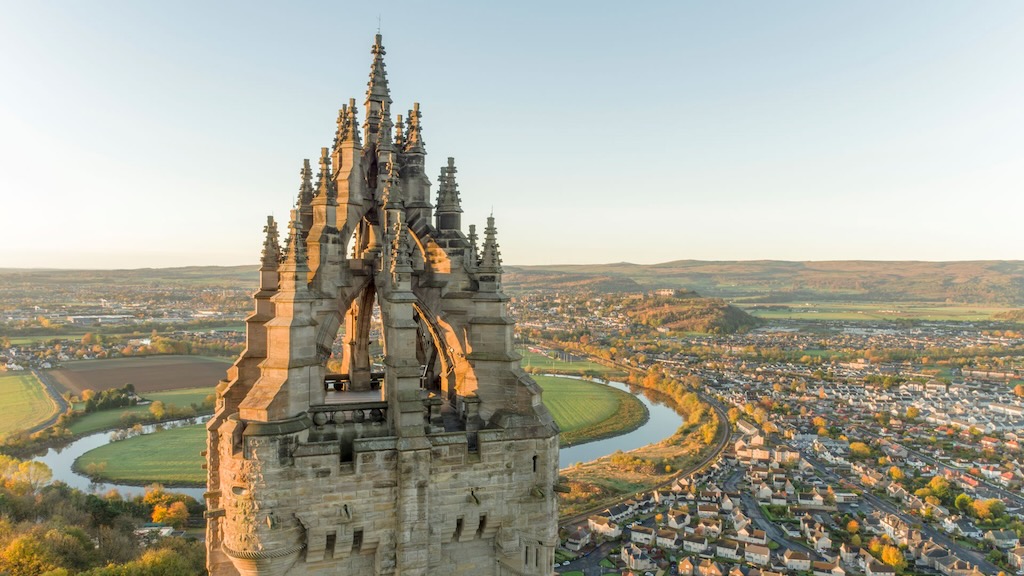
The National Wallace Monument stands on Abbey Craig, overlooking the city and the surrounding countryside. Completed in the nineteenth century, the monument commemorates William Wallace and his role in Scotland’s struggle for independence.
Visitors willing to climb its 246 steps are rewarded with panoramic views across the Forth Valley. The monument is outside the central walking area, so it is worth allowing additional time and planning transport if you want to include it in a day trip.
Closer to the city, Stirling Old Bridge offers another connection with the past. The surviving stone bridge dates from the fifteenth or sixteenth century, replacing earlier crossings near the site of the Battle of Stirling Bridge in 1297, when Scottish forces led by William Wallace and Andrew Moray defeated an English army.
The riverside offers a quieter contrast to the busy streets around the castle. It is an opportunity to appreciate the landscape that made Stirling so strategically important, with the winding River Forth and surrounding hills helping explain why this small city occupies such a prominent place in Scottish history.
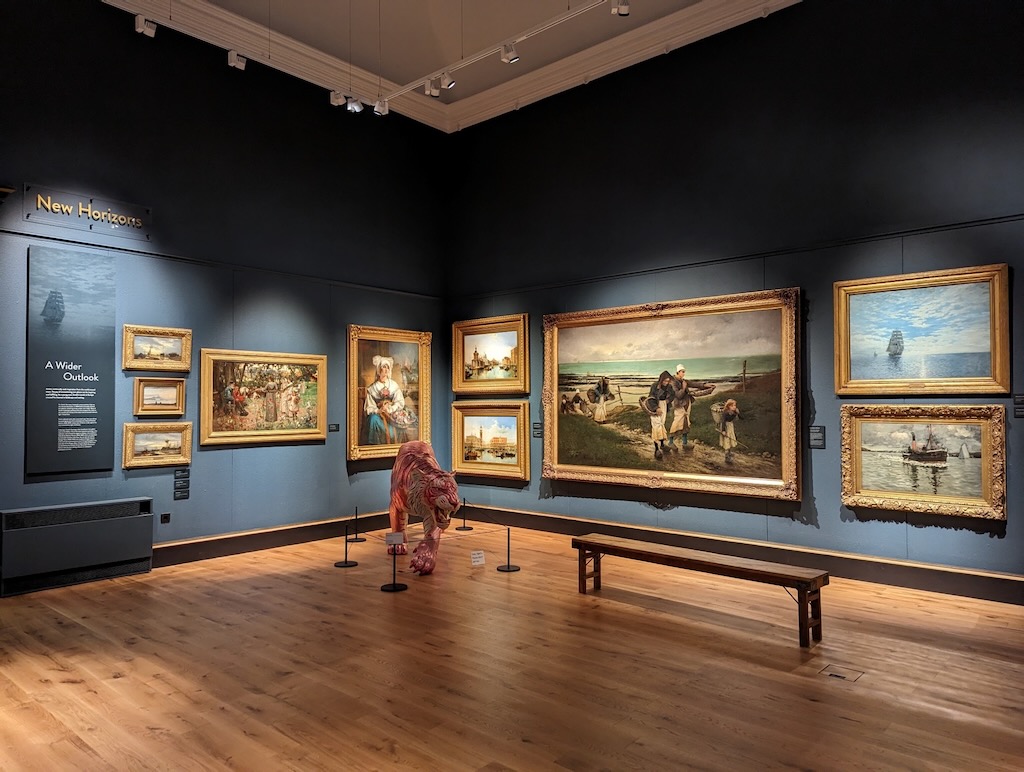
For those interested in art and local heritage, the Stirling Smith Art Gallery and Museum is another worthwhile addition. Its collections explore the history and culture of Stirling and the surrounding area.
Making a day of it
Stirling works particularly well as a railway day trip because its principal attractions are concentrated within a relatively small area.
A leisurely morning could begin with coffee near the station before climbing through the Old Town to the castle. After exploring the royal apartments and enjoying the views, lunch around the castle or city centre leaves time for the Church of the Holy Rude, Old Town Jail or a walk towards the river.
Those planning a longer visit could add the National Wallace Monument or use Stirling as a base for exploring more of central Scotland.
The city also provides an attractive alternative to the busier tourist centres of Edinburgh and Glasgow. It has the history and architecture to justify a visit in its own right, but on a scale that makes wandering around without a strict itinerary particularly enjoyable.
Why Stirling deserves a stop
There is something particularly satisfying about arriving in a historic city by train and discovering that so much of it is within walking distance.
Stirling combines some of Scotland’s most significant historic landmarks with independent places to eat, atmospheric streets and a remarkable setting. The castle may be the obvious attraction, but the pleasure of visiting comes just as much from the climb through the Old Town, finding somewhere for lunch and looking out across the landscape that shaped the country’s history.
Whether you are travelling between Glasgow and the Highlands or simply looking for somewhere different to explore for the day, Stirling is well worth stepping off the train for.

🚂 Follow the journey
🍽️ Stephen Plume writes about food, trains, and the people in between.
🚆 The Slow Train: Monthly rail stories. Join for my vetted regional food lists
🧳 Travel Kit: Curious about what I pack for the rails? See the list here


Leave a Reply