
Llandudno Junction is not the destination most people are thinking of when they set off for north Wales. It sounds practical rather than romantic, like somewhere designed for changing trains, checking timetables and moving on. That is not entirely unfair. It is a junction by name and by nature.
But railway stations do not always need to be beautiful to be useful. Llandudno Junction has the great advantage of putting you exactly where you need to be: close to Conwy, close to Llandudno, close to the coast, and close to the mountains. It is one of those railway places that works because of what it unlocks.
The prize is Conwy. From Llandudno Junction, the historic walled town is about a fifteen-minute walk away, or a short hop by train to Conwy itself. Not every mainline train stops at Conwy, so Llandudno Junction often makes the more practical arrival point.
Arrival and first impressions
The station itself is straightforward rather than dramatic. Transport for Wales describes it as a four-platform station, originally built in 1858, sitting two miles south of Llandudno. It is properly useful: a railhead for the coast, the castle, the resort town and the wider north Wales landscape.
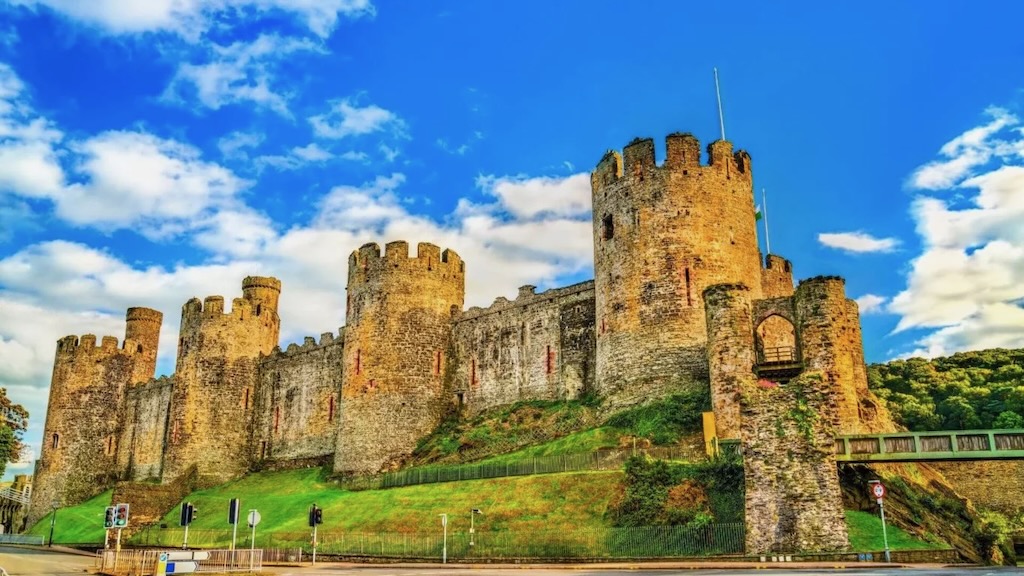
Leave the station and the route towards Conwy is immediately more interesting than the platforms suggest. The town sits across the water, held inside its medieval walls, with Castell Conwy rising above the estuary. There are few better examples in Britain of a short railway arrival turning into something genuinely memorable.
Conwy is compact, walkable and direct. You do not need a complicated itinerary. You need the castle, the walls, the harbour, a walk through the town, and enough time to let the place work on you.
Why Conwy works as a destination
Castell Conwy is the reason most people come, and it deserves the attention. Built for Edward I in the late thirteenth century, it forms part of the UNESCO World Heritage Site covering the castles and town walls of Edward in Gwynedd. UNESCO describes Conwy, alongside Beaumaris, Caernarfon and Harlech, as among the finest examples of late thirteenth and early fourteenth-century military architecture in Europe.
The castle is not just impressive from a distance. Cadw notes that Conwy contains the most complete surviving set of residential rooms used by medieval monarchy anywhere in England or Wales. That gives the place a different quality. It is not simply a defensive shell, although it does that very well. It was also built as royal accommodation, power made domestic as well as military.
There is a steep approach from the visitor centre, and the site includes steps, so it is worth planning properly if mobility is a consideration.
The town walls are part of the same experience. Conwy still feels enclosed in a way that many historic towns have lost. The railway brings you to the edge of it, and then the place does the rest.
Llandudno, the coast and the wider day
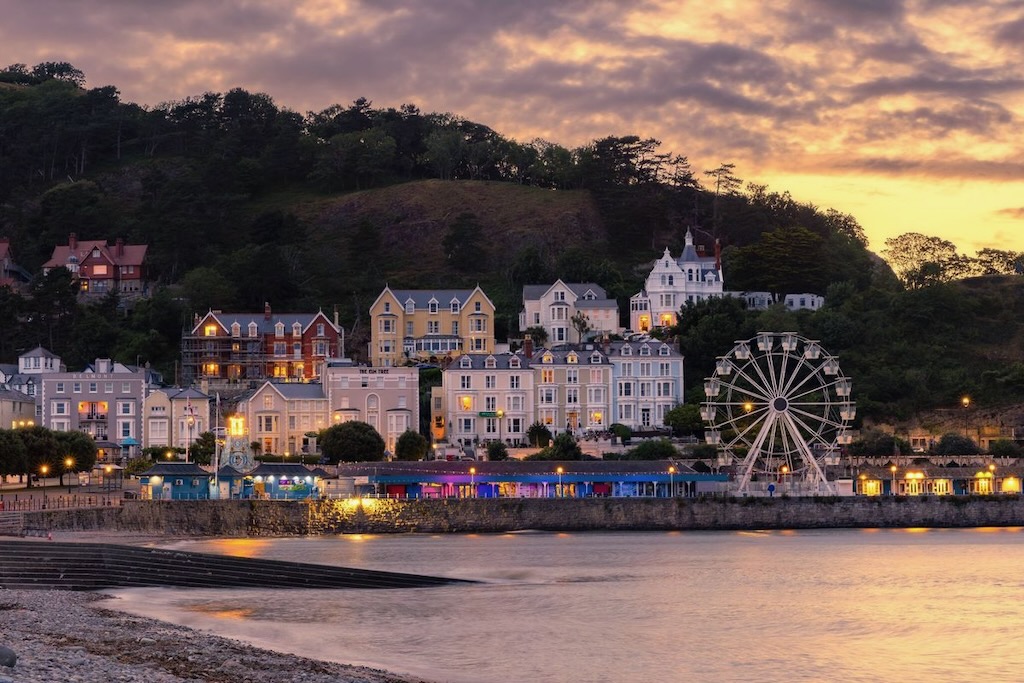
The useful thing about arriving at Llandudno Junction is that you do not have to choose only Conwy. Llandudno itself is close, with the pier, promenade and Great Orme giving the day a completely different rhythm. Transport for Wales places Llandudno Junction two miles south of Llandudno, which makes it a practical base for both the walled town and the resort.
That is the appeal. Conwy gives you stone, walls, estuary and medieval drama. Llandudno gives you seaside scale, Victorian confidence and a proper promenade. The railway puts both within reach.
This is one of the great strengths of north Wales by train. You can arrive without a car and still feel that the landscape has opened out rather than closed in.
Where to eat
For a serious meal, Bodysgallen Hall sits between Llandudno Junction and Llandudno, in a country house setting with views towards the castle and mountains. Its own restaurant information confirms it holds 2 AA Rosettes, with seasonal menus built around local produce, game and availability.

For something simpler, Conwy itself is better treated as a place to wander and choose with your eyes. This is a town for harbour snacks, cafés, bakeries and the kind of straightforward eating that fits a day spent walking around walls and looking across the estuary.

The better advice is not to over-plan the lunch. See the castle first, walk the town, then eat somewhere that lets you stay in Conwy rather than rushing back to the station.
Journey times
Llandudno Junction is served by Transport for Wales and Avanti West Coast, with connections along the north Wales coast and towards Chester, London and south Wales.
- London Euston to Llandudno Junction: around 3 hours on the fastest services.
- Chester to Llandudno Junction: around 50 minutes on the fastest services.
- Cardiff Central to Llandudno Junction: around 3 hours 50 minutes on the fastest services. Manchester Piccadilly to Llandudno: a little over 2 hours on direct services, with Llandudno Junction reached shortly before Llandudno.
Final thought
Llandudno Junction will probably never be anyone’s favourite station. That is not really the point. Its value is in the release: step off, cross towards Conwy, and within minutes the railway has delivered you into one of the most complete historic landscapes in Britain.
The station is functional. The arrival is exceptional.

🚂 Follow the journey
🍽️ Stephen Plume writes about food, trains, and the people in between.
🚆 The Slow Train: Monthly rail stories. Join for my vetted regional food lists
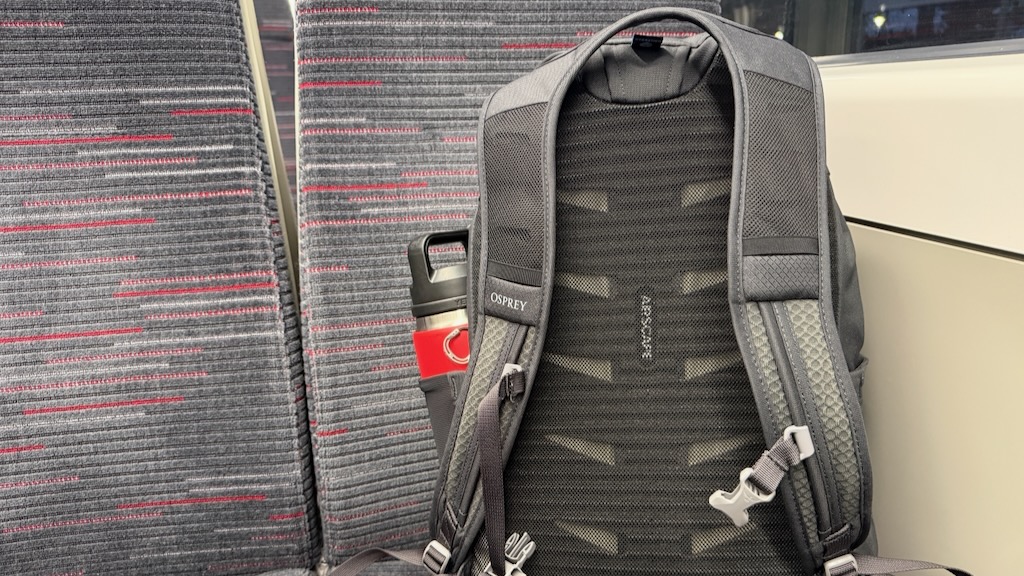
🧳 Travel Kit: Curious about what I pack for the rails? See the list here


Leave a Reply